
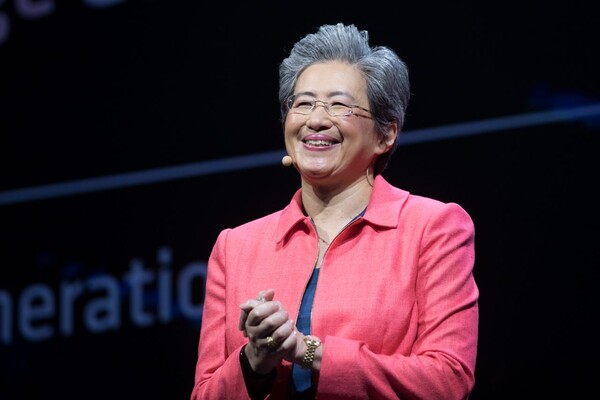
AMD has surpassed a $1 trillion market value, driven by expanding demand for artificial intelligence chips and strong results.
On Sept. 21, foreign media outlets including blockchain publication Cryptopolitan reported that AMD joined the ranks of $1 trillion semiconductor companies as record results and rising demand for AI chips pushed its market value above $1 trillion. The market no longer sees AMD as only Nvidia's closest rival, and is evaluating it as a key supplier of computing power to data centres.
AMD's fiscal 2026 second-quarter revenue was $11.5 billion, up 50% from a year earlier. Data centre revenue rose 107% from a year earlier to $6.7 billion. Non-GAAP earnings per share were $1.66, up 82% from a year earlier. AMD is sustaining its growth momentum on expanding demand for AI and data centres.
There have also been reports that AMD will raise product prices by 10 percent, drawing attention to the possibility of further revenue growth. The price increase, however, is based on external reports rather than guidance presented in AMD's official earnings release.
As demand for AI chips has become a key growth engine for the semiconductor market, AMD's corporate value is also becoming more closely tied to its AI business. In particular, a strategic partnership with Anthropic announced in July increased market interest in AMD's AI expansion. Anthropic plans to adopt AMD Instinct MI450 series graphics processing units at a scale of up to 2 gigawatts, with the first 1 gigawatt deployment set to begin in the first half of 2027. AMD decided to make a strategic investment of up to $5 billion in Anthropic.
The stock has also risen sharply. AMD shares are up about 185% so far in 2026. On Sept. 21, the stock closed up 9.95% from the previous session at $615.52, and hit an intraday record of $616.68. That pushed AMD's market value above $1 trillion for the first time.
AMD still shows a large market value gap with Nvidia, which leads the AI semiconductor market. Nvidia's market value stands at about $5.4 trillion. AMD is expanding the scope of competition with Nvidia by broadening its business beyond AI GPUs to server central processing units and integrated systems for data centres.
AMD's mid- to long-term data centre growth outlook is also in focus. AMD Chief Executive Lisa Su (리사 수) said on the second-quarter earnings conference call that she expects data centre revenue to more than double in 2027 from the previous year. AMD cited expanding demand for AI data centres, growth in server CPUs, and increased supply of AI accelerators and Helios systems as growth drivers.
How quickly AMD can expand its data centre business based on AI demand is seen as a key variable that will determine its future growth trend. Attention is focused on whether expanding investment in AI infrastructure and rising data centre revenue will continue even after it surpassed a $1 trillion market value.
 Seung-a Yoo
ysah@d-today.co.kr
Seung-a Yoo
ysah@d-today.co.kr