
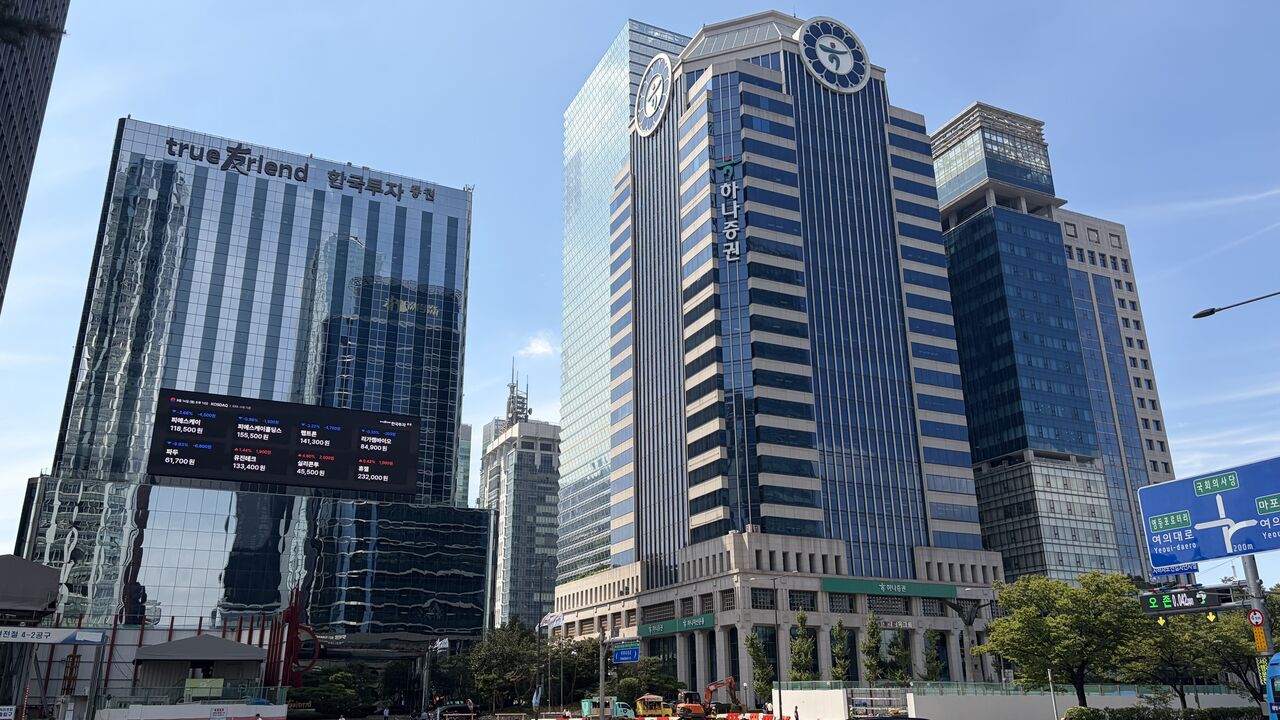
Competition in the bank debenture market is expanding with Samsung Securities entering and expectations that Meritz Securities will be approved. Securing customers through high-yield promotional offerings and managing profitability as funding costs rise have emerged as tasks for brokerages.
According to the financial investment industry on Sept. 21, Samsung Securities began selling its first bank debenture products that day. After receiving approval for short-term finance business from the Financial Services Commission on Sept. 9, it moved to actual sales, raising the number of domestic bank debenture operators to 8.
Meritz Securities' plan to be designated as a comprehensive financial investment business operator and to receive approval for short-term finance business passed review by the Securities and Futures Commission on Sept. 16. Final approval is expected to be decided at a regular Financial Services Commission meeting on Sept. 23. If approved, it would become the country's ninth bank debenture operator.
Samsung Securities offered a promotional rate of 5.5 percent a year for its first sales. The 2-day to 90-day product targets new customers from this month and customers whose total balance was under 1 million won as of the end of last month. The subscription limit is 1 million won per person, and the overall sales limit is 10 billion won.
Existing operators have also moved this month to secure customers. Kiwoom Securities offered a 5.0 percent a year promotional product with a 1-year maturity for customers opening an account with the firm for the first time, and Korea Investment & Securities launched a 4.9 percent a year 1-year product for new customers. A 4.5 percent a year 6-month promotional product launched by Shinhan Investment Corp on Sept. 14 exhausted its 30 billion won sales limit in about 5 hours.
The market size stood at 55.93 trillion won as of end-June, the most recent quarter-end tally. The figure is the combined balance of 7 bank debenture operators at the time, up 11.54 trillion won, or 26.0 percent, from 44.39 trillion won at end-June last year. Samsung Securities has started sales and more entrants are expected, but a rise above 60 trillion won remains only a forecast.
A major turning point for the market's rapid growth was 2022. The year-end bank debenture balance of the existing 4 operators then was 30.34 trillion won, an increase of about 13.6 trillion won over a year. That was an increase of about 81 percent in a year from about 16.7 trillion won at end-2021.
At the time, investor demand for yield coincided with brokerages' need to secure funds. As interest rates rose, contracted yields on bank debentures increased, drawing demand from investors seeking to place short-term surplus cash.
In the second half, as the short-term funding market tightened after the Legoland incident, brokerages expanded bank debenture funding to secure liquidity. Bank debentures were used as a way to attract customers and as a funding channel to reduce dependence on corporate bonds and commercial paper.
A recent trigger for expanded competition was new approvals at the end of last year. A market centered on four firms such as Korea Investment & Securities, NH Investment & Securities, KB Securities and Mirae Asset Securities was joined by Kiwoom Securities on Nov. 19 last year, and by Hana Securities and Shinhan Investment Corp on Dec. 17, after they received approval for short-term finance business. With Samsung Securities entering this month, the number of operators increased from 4 to 8 in less than a year.
In 2022, existing operators greatly increased their funding 규모, while since the end of last year a trend has been added of new operators joining competition to secure a customer base.
Brokerages are also competing because attracting new accounts and funds through bank debentures can later be linked to stock trading or sales of other financial products.
By balance, however, the share of the existing four operators remains large. As of end-June, Korea Investment & Securities recorded 22.47 trillion won, KB Securities 11.00 trillion won, Mirae Asset Securities 10.58 trillion won, and NH Investment & Securities 8.78 trillion won. Their combined total was 52.82 trillion won, or 94.4 percent of the overall market.
Brokerages are focusing on bank debentures because they can secure funds to use for corporate finance. A bank debenture is a product with a maturity of up to 1 year issued on a brokerage's own credit by a mega investment bank with equity capital of at least 4 trillion won that has received approval for short-term finance business.
Up to 200 percent of equity capital can be raised, and the secured funds are managed in corporate loans or bonds to generate profits from the spread over funding costs. It is structured to pay investors the principal and interest promised, but it is not covered by deposit protection.
High-yield promotional offerings do not mean the overall funding rate. Promotional products with limits on eligible customers, amounts and sales periods also have a marketing character aimed at securing new customers. To judge actual profitability, it is necessary to look at not only promotional rates but also the average funding costs across all products, such as on-demand and fixed-term types, together with returns on managed assets.
Recent interest rate rises give new operators both opportunity and burden. There is room to secure higher yields than before on newly purchased bonds or new loans, but rates that must be paid to customers can also rise.
Bonds purchased earlier at low rates can fall in price as market rates rise, creating valuation losses. Later entry itself does not guarantee an advantage in profitability.
Some existing operators are already adjusting issuance 규모. NH Investment & Securities' balance fell 4.3 percent to 8.78 trillion won at end-June from 9.17 trillion won at end-March. KB Securities also declined 4.0 percent over the period to 11.00 trillion won from 11.46 trillion won. Overall market growth and individual brokerages' funding strategies are not moving only in the same direction.
Management rules are also changing. Comprehensive financial investment business operators must supply venture capital equivalent to 10 percent of bank debenture and IMA funding amounts out of total managed assets this year.
The mandatory ratio will rise to 20 percent in 2027 and 25 percent in 2028. The ceiling on managing bank debenture funding in real estate-related assets will be lowered to 15 percent this year and 10 percent in 2027.
With more operators, customers have more choices, but brokerages are also required to have capabilities to find investments and manage risks. If they stop at raising funds at high rates as the venture-capital supply obligation expands, profitability can decline.
An official in the financial investment industry said, "Even after brokerages secure new customers, competitiveness is expected to be determined by their ability to manage funding costs and secure liquidity in line with the timing of recovery of investment assets and bank debenture redemption schedules."
 Oh Sang-yup
yub@d-today.co.kr
Oh Sang-yup
yub@d-today.co.kr