
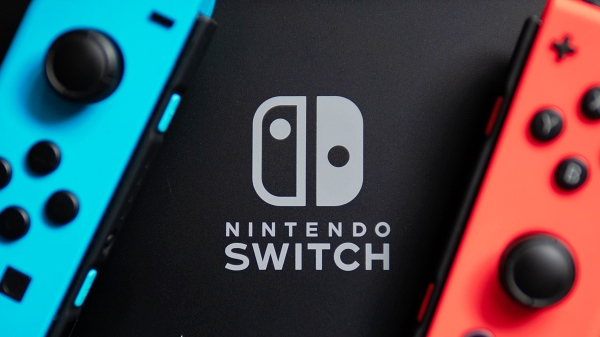
After the launch of Nintendo’s Switch 2, the buying value of the existing Switch is increasingly shifting to the secondhand market rather than new units. New units offer fewer reasons to choose them because the price gap with Switch 2 is not large, but used consoles remain competitive because they allow players to enjoy Nintendo’s vast game library at a lower price.
Engadget reported on Sept. 20 that as of 2026 the standard Nintendo Switch sells for $339.99 and the Switch OLED for $399.99. Switch 2, meanwhile, has been sold for $499.99 since Sept. 1.
On a new-unit basis, the difference is only about $100. Because Switch 2 supports existing Switch games and its exclusive titles continue to grow, the structure pushes buyers of new hardware toward Switch 2.
The position of the Switch OLED has become more ambiguous. Its 7-inch OLED display and longer battery life remain strengths, but for users who mostly play on a TV there is little performance difference from the standard Switch. When game prices are added, buyers also have to weigh the price gap with Switch 2.
Switch 2 is also improving the experience of playing existing Switch games. Some compatible games apply a “handheld mode boost”, allowing performance closer to TV mode even in portable play. Some titles offer free updates, and paid upgrade packs that raise graphics and performance are also emerging.
The exclusive game lineup is also expanding. “Splatoon Raiders” was released as a Switch 2 exclusive, and “Fire Emblem: Fortunes Weave” was released on Sept. 17. “Metroid Ravenous” is also due for release in January 2027.
A generational shift is also emerging in third-party games. As new releases are developed with Switch 2 as the focus, cases are increasing where the existing Switch is effectively treated as one-generation-old hardware.
That does not mean all advantages of the existing Switch have disappeared. For users focused on portable play, the Switch OLED can still be an attractive option. The Switch OLED uses a 7-inch OLED panel, offering higher contrast and deeper blacks than Switch 2’s LCD. Battery life is also longer on the Switch OLED, at 4.5 to 9 hours, versus 2 to 6.5 hours on Switch 2.
Used units make the difference on price. Based on GameStop, a used standard Switch sells for about $200 and a used OLED model for about $250. Compared with Switch 2, the price gap can reach close to $300. For users who do not need TV connectivity, a used Switch Lite at about $170 can also be an option.
The biggest asset of the existing Switch is the game content built up over 9 years. A vast library exists not only of Nintendo games but also third-party and indie titles. Nintendo’s position is that it will continue operating existing services such as the eShop and Nintendo Switch Online going forward as well.
Compatible digital games already purchased can also be downloaded again and played on Switch 2. As a result, for users who do not necessarily need the latest hardware, it is also possible to play existing games on cheaper older devices.
For users who prefer physical games, the advantages of the existing Switch become clearer. Some Switch 2 games are released in a game-key card format, meaning the card itself does not contain the full game data and additional downloads are required before running. Existing Switch cartridges, by contrast, often contain the full game, creating differences in lending, resale and collecting.
When buying a used Switch, buyers should also carefully check the device’s condition. For the standard Switch, models with serial numbers starting with XKW are advantageous in battery life. Nintendo says the XKW series can be used for 4.5 to 9 hours on a single charge, while older pre-revision models are at about 2.5 to 6.5 hours.
Buyers should also check Joy-Con stick drift as well as the USB-C port, display, dock and charger before a transaction. Repair site iFixit rated the repairability of the existing Switch at 4 out of 10. It cited reasons such as an adhesive battery, a soldered USB-C port, and a lack of official replacement parts and repair instructions.
The battery is also a factor to check in a used purchase. Nintendo estimates the Switch battery will retain about 80 percent of its original capacity even after about 800 charges. The condition of actual used devices, however, can vary depending on the period of use and charging habits.
Ultimately, in 2026 the competitiveness of the existing Switch is clearer in the used market than in new units. With Switch 2 exclusives and performance improvements continuing, the incentive to buy the existing Switch at list price has declined, but the story changes for used units around $200.
If users prioritize the latest performance and new releases, Switch 2 has become the new option. For users who want to enjoy Nintendo games already built up at a low price, the existing Switch remains one option.
 Jinju Hong
hongjj@d-today.co.kr
Jinju Hong
hongjj@d-today.co.kr