
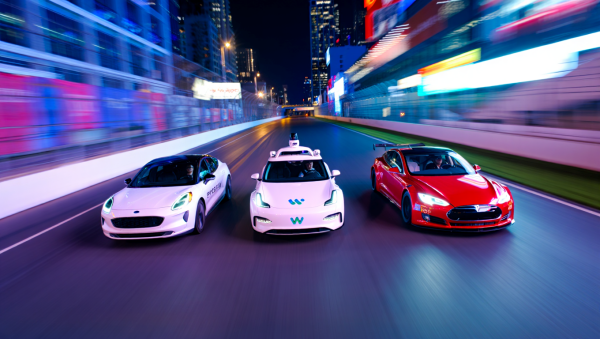
Ford declared it will introduce Level 3 (L3) autonomous driving technology that does not require driver intervention in affordable electric vehicles by 2028. Under the banner that autonomous driving is not the preserve of a small wealthy class, it is betting on value for money to take on a market led by Tesla and Waymo.
Cleantechnica, an electric vehicle outlet, reported on Jan. 12 that Ford unveiled a “popularisation of autonomous driving” roadmap at CES 2026. Ford plans to install the necessary hardware on its next-generation affordable electric vehicle platform (UEV) to be launched in 2027, then commercialise L3 functions through a software update in 2028.
Ford called “democratisation of technology” the core of its strategy. It said it aims to break the practice of fitting advanced driver-assistance features only to expensive luxury vehicles priced at $70,000 to $100,000. Ford said, “Just as Henry Ford popularised the automobile, technology should also be something anyone can enjoy,” adding it would cut costs by 30 percent versus outside suppliers through its in-house hardware and software development team and apply L3 technology to mass-market models as well.
Industry views are mixed, with expectations and concerns. A key issue is a timeline that lags competitors by more than 2 years. Tesla already offers Full Self-Driving (FSD, requiring management and supervision) across the United States and has reached a level that enables driving from Los Angeles to Washington, D.C. Waymo is also expanding as it establishes driverless robotaxi services in major cities. Critics say 2028 is too far off in a fast-changing autonomous driving market.
Questions also remain about how broadly the technology can be used. Ford’s current driver-assistance system, BlueCruise, works only on certain pre-mapped highways. The approach is similar to General Motors' Super Cruise, but its scalability is clearly limited compared with Tesla’s FSD, which can be activated on virtually all roads. There are concerns that even if Ford’s L3 system in 2028 touts “eyes-off” capability, it could end up as a half-measure usable only in limited areas.
Still, it is a positive sign that Ford is upgrading its system using driving data collected from more than 1.2 million BlueCruise-equipped vehicles currently on the road.
As Ford joins the autonomous driving race later than others, competition is expected to intensify. The key will be how quickly Ford can narrow the technology gap with Waymo and Tesla and whether it can deliver a complete technology at the promised time.
 Yoonseo Lee
yslee@d-today.co.kr
Yoonseo Lee
yslee@d-today.co.kr