
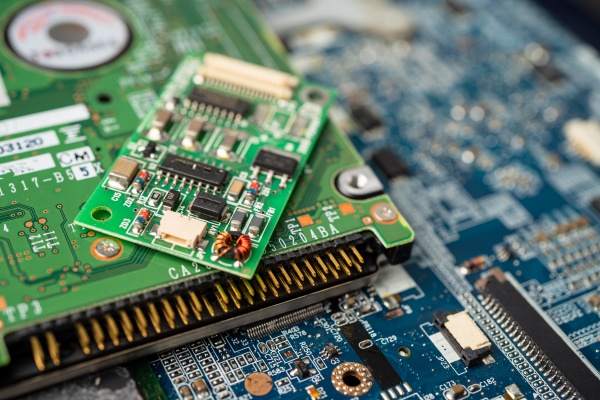
A warning has been issued that the spread of artificial intelligence (AI) could worsen a new electronic waste problem. Analysis shows that if AI data centres expand and large-scale replacement occurs not only for servers and graphics processing units (GPUs) but also for power, cooling and network equipment, up to 617 million tonnes of additional e-waste could be generated by 2050.
On Sept. 16 local time, IT outlet The Verge reported that the non-profit Basel Action Network estimated AI-related e-waste from 2025 to 2050 could range from at least 395 million tonnes to as much as 617 million tonnes.
The estimate is notable for defining AI infrastructure more broadly than existing research. While earlier studies mainly focused on data centre servers and GPUs, Basel Action Network included power supply and distribution facilities, cooling systems, backup power and network equipment needed to operate data centres.
It also included communications infrastructure and personal devices that could become obsolete more quickly as AI advances. The group judged that as AI models and services become more sophisticated, replacement cycles could shorten not only for data centre equipment but also for supporting infrastructure and related devices.
The group said that applying this scope could result in about 70,000 tonnes of e-waste per 1 gigawatt of data centre capacity. The report also cited McKinsey data projecting global data centre capacity could reach up to 219 gigawatts in 2030.
This led to calculations that if AI infrastructure expands rapidly, an additional 8.6 million to 13.1 million tonnes of retired equipment could be generated each year by mid-century.
Jim Puckett (짐 퍼켓), founder and chief strategic officer of Basel Action Network, pointed out that "AI may look like an intangible technology, but in reality it depends on enormous amounts of highly specialised hardware." He explained that if companies and governments do not prepare for waste problems from expanding AI infrastructure, they could worsen existing toxic waste issues.
E-waste processing systems themselves are already near their limits. The report said about 68.3 million tonnes of e-waste are generated globally each year, and less than a quarter is formally collected and recycled.
Much of the remainder flows into informal collection and processing networks. In that process, waste may be burned or landfilled, raising the possibility that hazardous substances such as lead and chromium could expose workers and the surrounding environment.
The report also flagged the U.S. e-waste processing problem. The United States is among the countries with the most data centres in the world, but it has yet to ratify the Basel Convention, which restricts international trade in hazardous waste.
As a result, recyclers in the United States sometimes send e-waste overseas, and concerns have been raised that these shipments could flow into informal so-called "backyard recycling". The World Health Organization (WHO) reports that millions of children who work or live near informal e-waste recycling sites could be exposed to health risks.
Basel Action Network projected that global e-waste itself will surge. It estimated that by 2050, annual global e-waste generation could reach up to 211 million tonnes, rising to about three times current levels. It put the share of AI-related waste at about 15 to 20 percent.
The larger estimate compared with previous research was influenced by differences in analytical scope. Basel Action Network said past studies excluded about 87 percent of data centres' electrical and mechanical infrastructure from analysis.
Earlier research has in fact projected relatively smaller volumes of AI-driven e-waste. One study published in 2024 estimated that e-waste generated by AI in 2030 would reach 1.2 million to 5 million tonnes. Another study released in February found that in the late 2020s, AI servers could generate 131,000 to 225,000 tonnes of e-waste annually. That is similar in scale to the total e-waste generated by Denmark.
The report highlighted that it is difficult to calculate AI's environmental costs solely from replacement cycles of GPUs and servers. It said power, cooling and network infrastructure needed for data centre expansion, along with related devices whose replacement timing could be brought forward by the spread of AI, should also be considered together.
As the AI industry continues data centre investment and expands computing capacity, calls are expected to grow for measures covering equipment collection and recycling, waste processing infrastructure and management of cross-border movement of e-waste.
 Jinju Hong
hongjj@d-today.co.kr
Jinju Hong
hongjj@d-today.co.kr