
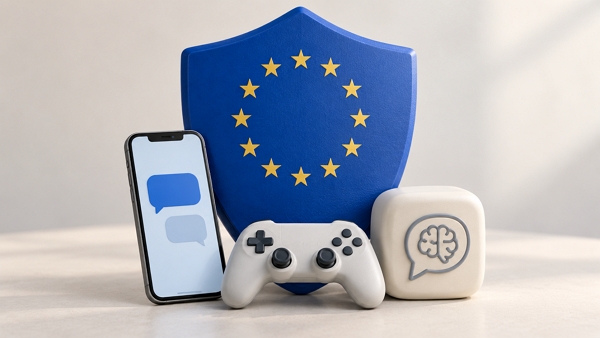
The European Union is pushing plans to ban social media use by children under 13 and expand child-protection rules online to include online games and AI chatbots.
On Sept. 17, Japanese IT outlet Gigazine reported that the European Commission is set to present an “EU Kids Act” that includes age-based limits on online services and safety obligations for operators.
European Commission President Ursula von der Leyen (우르줄라 폰데어라이엔) said in a speech to the European Parliament the day before that it would ban social media use for those under 13, and allow only limited accounts opened and managed by parents for those aged 13 to 14. The EU also plans to allow personal accounts from age 15, but apply separate safety-by-design standards to users under 18. The scope is being considered for expansion beyond social media and video-sharing platforms to include online games, AI chatbots and AI companions.
According to the draft bill, children aged 3 to 12 would be allowed to use only child-focused services that meet strict safety standards, through accounts managed by parents. It includes a plan to prohibit access to covered services for children under 3. Separate, differentiated rules for AI services are also being discussed depending on the type of service and the user’s age.
Operators are expected to be required to limit features that induce addiction and the recommendation of harmful content, and to provide reporting functions and parental control tools. A plan to introduce effective age verification in the process of creating social media accounts and downloading games is also under review.
The EU believes existing child-protection provisions in the Digital Services Act alone make it difficult to standardise age-based usage restrictions. The new law is intended to strengthen platforms’ responsibility to provide services that are safe for minors.
The final content of the bill has not been decided. The applicable ages, regulated services and operator obligations could change during reviews by EU member states and the European Parliament.
 Jaewon Choi
ittt_0801@d-today.co.kr
Jaewon Choi
ittt_0801@d-today.co.kr