
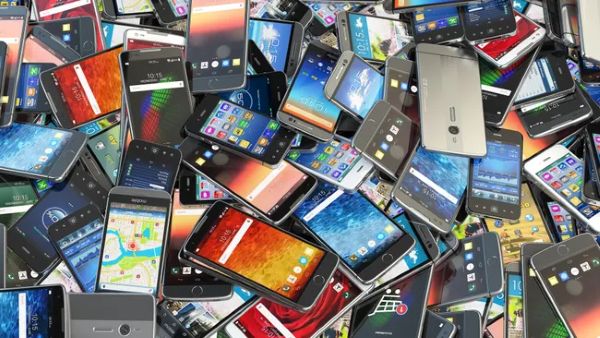
As memory chip shortages deepen due to demand for artificial intelligence, prices are rising in the used market even for damaged or old smartphones. Broken smartphones once left in drawers are emerging as assets with unexpected monetary value.
On Sept. 13, TechRadar reported that the repair and refurbishing industry is competing to secure low-grade smartphones and parts that were previously treated as virtually waste.
Data from business-to-business used smartphone trading platform B-Stock showed prices for Apple and Samsung Electronics devices rose in the second quarter of 2026 compared with the previous two quarters.
Trading volumes also shifted. Last year, D-grade phones, the lowest condition category, accounted for most sales volumes. In the first half of 2026, C-grade phones made up 37.8 percent of total sales, overtaking D-grade phones at 31.6 percent. As the tendency to use smartphones for longer strengthens, more older devices appear to be entering the market as low-grade listings.
Prices of individual models also rose. At Apple, the iPhone 17 Pro Max recorded the highest price, averaging $940 (about 1.3 million won) across all condition grades in the second quarter. At Samsung Electronics, the Galaxy S23 Ultra, S22 Ultra and S24 Ultra were traded most, and the S22 Ultra ranked second in sales volume, surpassing the Z Fold5.
Prices of previous-generation Samsung Electronics flagship models rose even after the release of the Galaxy S26. The S23 Ultra in good condition rose to $425 (about 600,000 won) in June, a high for the year.
Manufacturers have not yet reached the stage of routinely separating memory chips from damaged smartphones and reusing them in new products. That is because testing and compatibility and reliability verification are complex. Still, as memory prices rise, it is becoming more economical to recover parts that were previously not worth retrieving once labor costs were considered.
Recoverable parts are not limited to memory chips. Displays, camera modules, batteries, charging ports, housings, speakers, cables and circuit boards can also retain value even if the smartphone itself is beyond repair.
A smartphone classified in the lowest grade does not necessarily mean all internal parts are in the same condition. A smartphone used for more than 4 years can be classified in the lowest grade solely because it fails to meet standards only in a battery performance test.
Still, it is hard to view this trend as a sudden spread of environmental awareness. Consumers do not necessarily recycle devices for environmental reasons, and distributors are also strengthening trade-in terms to maintain parts supply.
It remains to be seen whether this change will lead to a meaningful reduction in electronic waste itself, or whether it will only shift electronic waste to more profitable distribution channels.
 Seung-a Yoo
ysah@d-today.co.kr
Seung-a Yoo
ysah@d-today.co.kr