
[DigitalToday reporter Jinju Hong] The cryptocurrency market has no shortage of cases whose reality has not been uncovered for years even though transaction records remain on the blockchain. From the identity of bitcoin creator Satoshi Nakamoto to major exchange hacks, missing bitcoin and fugitives accused of fraud, the anonymity and characteristics of digital assets have combined to leave some as enduring mysteries.
In connection with this, on Sept. 9 (local time), blockchain media outlet Cointelegraph took an in-depth look at 10 of the biggest mysteries in the cryptocurrency market that remain unsolved.
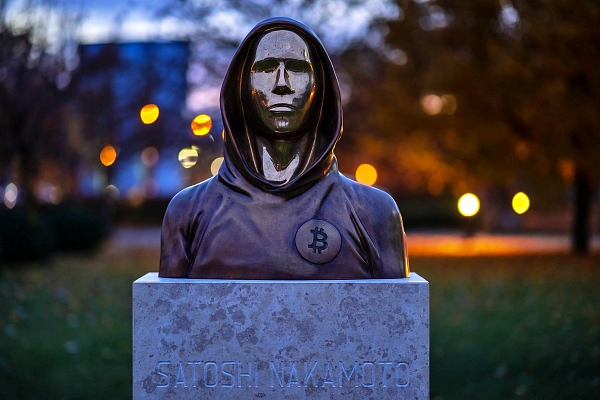
The oldest mystery is overwhelmingly the identity of Satoshi Nakamoto, the creator of bitcoin. Satoshi released the bitcoin white paper in 2008 and mined the genesis block in 2009, before halting public activity in 2010. Several candidates later emerged, but no conclusive evidence appeared. The identity of "Patoshi", estimated to hold about 1.1 million BTC based on early bitcoin mining patterns, has also not been confirmed as connected to Satoshi.
Bitcoin that disappeared along with an exchange collapse is also among the best-known mysteries. Mt. Gox said in 2014 that about 850,000 BTC had vanished, and later found 200,000 BTC, but the exact whereabouts of the remaining amount remain disputed. U.S. prosecutors have alleged that Russian nationals stole and laundered about 647,000 BTC, but the full outflow process and responsibility have not been fully uncovered.
Canadian exchange QuadrigaCX also left questions. After founder Gerald Cotten died suddenly in 2018, customers could no longer access their assets. Investigators found signs that customer funds had been moved into personal accounts, but the existence of hidden wallets and the overall structure of the case were never clearly established.
The whereabouts of Ruja Ignatova, founder of OneCoin and dubbed the Cryptoqueen, also remain unknown. She is accused of causing losses of more than $4 billion to investors around the world through OneCoin, and disappeared after traveling from Sofia to Athens in 2017. The U.S. Federal Bureau of Investigation (FBI) is still searching for her.
A notable case of failing to safeguard a personal wallet is that of James Howells. James Howells, an IT worker in Wales, Britain, mistakenly threw away a hard drive in 2013 containing access keys to 8,000 bitcoin. He even presented a plan to excavate the device buried in a large landfill, but a court in January 2025 made a final judgment that the likelihood of recovery was not realistic. Howells' bitcoin remains on the blockchain, but access is impossible.
In ethereum, a major case is the 2016 hack of The DAO. The attacker exploited a smart contract vulnerability to siphon off more than 3.6 million ETH, and the incident ultimately led to the split between Ethereum and Ethereum Classic. A person identified as the attacker denied the allegations, and no official punishment was carried out.
An outflow of about $415 million in assets that occurred right after FTX filed for bankruptcy also has not yielded a definitive culprit. Authorities seized some assets and tracked their movement routes, but it has not been concluded whether it was the work of an external hacker or the use of internal access privileges.
The death of Nikolai Mushegian, one of the figures who built early DeFi infrastructure, also remains controversial. Mushegian, an early MakerDAO developer and co-founder of Balancer, was found dead on Oct. 28, 2022, in the sea near Condado Beach in San Juan, Puerto Rico. Local police believed he was swept away by strong currents while swimming, but hours before his death he warned on social media that he could be killed. He posted that the U.S. Central Intelligence Agency, Mossad and "pedophile elites" were setting him up and trying to kill him. The Puerto Rico Department of Justice concluded after about a year of investigation that it could not find a link to a crime.
More recently, a case in which someone burned long-held bitcoin also drew attention. In May, someone sent about 107 BTC, worth $8.5 million at the time, to an address that cannot be used permanently. It was also confirmed that some of the amount passed through a place believed to be a major custodian, but why the bitcoin was deliberately burned has not been disclosed.
These cases show that even if the blockchain makes transaction histories public, it does not resolve all questions in the market. In particular, when anonymous wallets, exchange collapses, failures to safeguard digital assets and investigative gaps overlap, the final actors and motives can remain even if money flows are visible.
 Jinju Hong
hongjj@d-today.co.kr
Jinju Hong
hongjj@d-today.co.kr