
Electric vehicle batteries keep the low-90 percent range of their initial capacity even after driving about 150,000 km, an analysis showed. Despite consumer concerns about EV battery life, the actual pace of battery degradation is relatively gradual.
On Sept. 3, EV outlet CleanTechnica reported that EV diagnostics company Aviloo compared battery performance retention rates for 20 major EV models based on data from more than 500,000 battery health checks conducted from 2022 to 2026 in North and South America, Europe, Asia and Australia.
The analysis found many EVs maintained about 95 percent of initial battery capacity, or range, even after 50,000 km of driving. When mileage reached 150,000 km, they generally kept the low-90 percent range of initial performance.
Some vehicles saw only a few percentage points of decline from initial battery capacity even after surpassing 150,000 km. This differs from the common concern that battery performance will fall sharply if an EV is operated for a long time.
Differences by model were large. Some models showed cases in which battery capacity fell about 20 percent after driving about 100,000 km. This suggests it is difficult to say that all EV batteries have the same level of durability.
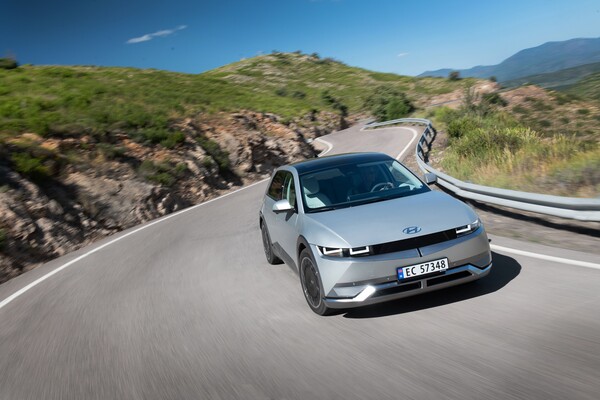
Models cited for high battery performance retention included Hyundai Motor's Ioniq 5 and Kona EV. The Mercedes-Benz EQA, BMW i4, Volvo XC40 Recharge, Polestar 2 and Ford Mustang Mach-E were also assessed as standing out in terms of maintaining battery performance.
A notable point in the survey is market perceptions of EV battery degradation. CleanTechnica pointed out that concerns about EV range and battery life may be larger than necessary compared with reality.
It cited the sharp rise in the range of recently sold EVs compared with the past. As current EV range has increased by about three to four times compared with about 10 years ago, the perceived impact in actual driving could be limited even if the battery degrades to a certain extent, it said.
For example, an EV with a sufficiently long initial range may not face major issues in daily commuting or routine driving even if battery capacity declines somewhat. CleanTechnica said the impact in real-world use could be limited to something like charging a few more times per month.
There are limits to generalising the results to all EVs. The vehicles Aviloo analysed were limited to 20 popular models rather than all EVs worldwide. It is therefore difficult to conclude that a specific brand or model has the best long-term battery durability.
Even so, it is assessed as data that can help gauge actual EV battery durability because it is based on more than 500,000 battery health data points.
As the EV market matures, the standards used to evaluate battery performance may change. Rather than simply comparing maximum range when new, how stably performance is maintained after driving more than 100,000 to 150,000 km could emerge as an important criterion in purchases of used EVs and new cars.
The survey results show that at least many of today's major EVs maintain battery performance more steadily than expected even after long-distance driving. How slowly degradation occurs, and how much usability remains in actual driving even after degradation, is set to become a new benchmark in EV battery competition.
 Jinju Hong
hongjj@d-today.co.kr
Jinju Hong
hongjj@d-today.co.kr