
Search results for space debris
Industry
U.S. makes first official acknowledgement of in-orbit space weapons deployment
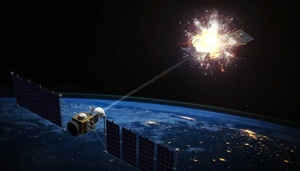
The United States has officially confirmed for the first time that it is deploying and operating weapons in space orbit. Air Force Secretary Troy Meink said the United States has placed “space-control weapons” in orbit to defend space assets and joint forces against hostile actors, but did not disclose the type, operations or timing. He cited concern about Chinese and Russian weapons development. The disclosure could fuel more open competition in space weapons.
Telecommunications & Media
Low-earth-orbit satellite communications: How to use them in the space internet era
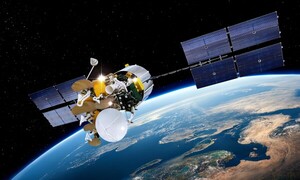
Low-earth-orbit satellite communications aim to extend network coverage to areas beyond terrestrial infrastructure, including mountains, islands, open seas and the sky. Unlike geostationary satellites at about 36,000 km altitude, low-earth-orbit satellites operate at about 200 to 2,000 km, reducing latency but requiring large constellations. South Korea has approved cross-border supply deals involving Starlink and Eutelsat OneWeb. The government targets an independent network by 2035 and plans a 300 billion won R&D programme by 2030.
AI & Enterprise
Test-driving Google\'s Gemini 3.5 Flash for travel plans, cleaning and coding
Google’s new AI model Gemini 3.5 Flash is positioned as a practical tool that supports coding, long-form reasoning, multimodal understanding and parallel task handling. The evaluation used five prompts, including building a simulator from a space debris report, designing a travel itinerary, guiding a craft task, creating a 25-minute cleaning plan and running a humorous parallel-reasoning investigation. The test highlighted context retention and switching between task types, while also raising questions about user data access needs.
-
Telecommunications & Media
SpaceX revenue mostly from Starlink, rockets and AI in the red
-

Industry
SpaceX makes IPO filing public, plans Nasdaq listing under SPCX
-

AI & Enterprise
Four essential conditions for launching space data centers
-
AI & Enterprise
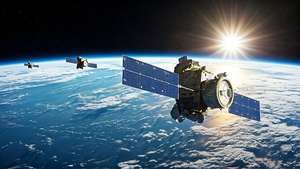
SpaceX to launch 1 million solar-powered data centres into space