
Search results for Science Advances
Environment
If Earth warms 2 degrees C, 650 million children face an extra month of extreme heat - study
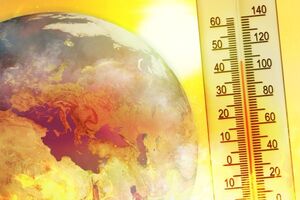
Climate change is exposing about 560 million children under 10 worldwide to at least 30 additional days of heat stress each year, a study found. That is nearly three times the number of people aged 60 to 69 facing the same level of added heat stress. The burden is concentrated in tropical, low-income regions including South and Southeast Asia and West Africa. If global warming reaches 1.5 degrees C, affected children could rise to 620 million, and to 650 million at 2 degrees C.
AI & Enterprise
KAIST develops silicon-based next-generation optimisation computing hardware
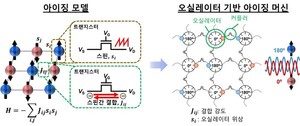
KAIST said a joint research team led by professors Yangkyu Choi (최양규) and Sanghyun Kim (김상현) has developed an oscillator-based Ising machine using only existing silicon semiconductor processes. The team implemented both oscillators and couplers with a single silicon transistor, reducing frequency mismatch and enabling stable synchronisation and multi-state coupling. It improved model expressiveness and solution-search performance and solved the Max-Cut problem. KAIST said it can be mass-produced on existing lines.
Industry
KAIST develops method to analyse semiconductor electron traps and defects simultaneously
KAIST and IBM developed a measurement technique to identify internal defects in semiconductors with 1,000 times greater precision, KAIST said on Thursday. The method combines Hall measurements with light and temperature conditions to calculate the amount and properties of electron traps while also measuring charge transport. The team validated the approach in silicon and then applied it to perovskite, finding trace electron traps that were difficult to detect with existing methods.