Search results for Databricks Korea
AI & Enterprise
KT targets Chungcheong manufacturing, defense AX with global partners
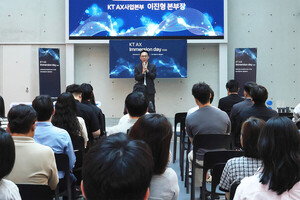
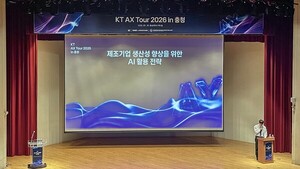
KT is working with global companies to support artificial intelligence transformation, known as AX, for businesses in the Chungcheong region. It held the \'KT AX Tour 2026 in Chungcheong\' at Chungnam National University in Daejeon on Sept. 30 with the university and the Smart Manufacturing Innovation Association. KT, Microsoft, AWS and other partners presented industrial use cases and provided one-on-one consulting to attending firms.

AI & Enterprise
Beyond AI adoption, embedding operations is key to closing the scaling gap for digital-native companies
Digital-native companies often lead in willingness to adopt AI and the breadth of its use, but that does not always translate into the highest level of operational maturity, a 2026 report found. Executives at digital-native firms most frequently cited embedding AI at scale across core business processes as a top investment priority. The report distinguishes broad deployment from full operational embedding, including use by more than 100 users under SLAs with continuous monitoring. Examples in South Korea highlight the need for shared data, governance and operating foundations.
AI & Enterprise
Execution, not AI models, is what separates finance through data platforms
AI is now widespread across the financial services industry, but results vary by institution. Some firms that have embedded AI in operations are speeding up decision-making and cutting operating costs by as much as 20 percent. The key constraint is not model performance but the ability to scale AI into real workflows amid fragmented data infrastructure and strict security and governance requirements. The article argues that integrated data and AI platforms, with built-in governance, underpin stronger execution.