
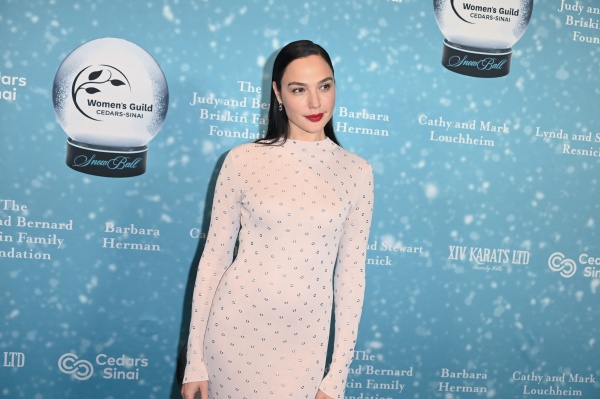
[DigitalToday reporter Jinju Hong] Hollywood actor Gal Gadot (갤 가돗) said she is appearing in a bitcoin-themed film made using artificial intelligence (AI) technology, and has put contractual safeguards in place to keep her acting protected from AI. The aim is to accept AI use in the filmmaking process while preventing an actor’s performance itself from being replaced or altered by AI.
On Sept. 1 (local time), blockchain outlet Decrypt reported that Gadot said in a recent podcast interview that negotiations for her appearance contract for the film "Bitcoin: Killing Satoshi" took 6 months.
Gadot said she has fears about AI technology itself. She said AI is already spreading quickly on film sets, so it is more realistic to use it while protecting what she can rather than ignoring it.
She referred to AI by saying, in effect, "the train has already left," and said that if people do not work with AI technology they could instead be pushed completely out of the industry.
The film is a thriller with a budget of about $70 million that follows a search for Satoshi Nakamoto, an anonymous figure known as the creator of bitcoin. It is directed by Doug Liman and also stars Casey Affleck, Pete Davidson and Isla Fisher.
Filming takes place against the backdrop of multiple continents and about 200 locations, but the production did not use a method where actors travel to the actual locations. Instead, actors performed inside an old car showroom surrounded by grey screens. The production then used AI technology to create visual elements such as sets and lighting.
Gadot stressed that while AI was used for sets and lighting, she performed all her acting herself. She said she did not want AI to be involved in her performance in any way.
For that reason, AI-related provisions also became a key issue in the contract negotiations. Gadot said her legal team reviewed all possibilities that could arise in connection with AI.
She described it as the longest contract she has experienced. She said the legal team assumed various scenarios related to AI technology and reflected in the contract language that could protect an actor’s rights.
It was reported that the U.S. actors' union SAG also sought advice from Gadot’s lawyer while setting out a direction for revising contracts to protect other actors.
AI was also used to cut production costs. Producer Ryan Kavanaugh said that if the film had been made in the traditional way, the production cost would have exceeded $300 million, and that the AI-based approach saved more than $200 million.
Filming proceeded in a state where there was effectively nothing on set apart from the actors. Gadot said the production environment was similar to a theatre stage.
Because there was no need to wait for actual sets and lighting installations, filming efficiency also improved. Gadot recalled being able to shoot for 10 consecutive hours a day. She said she has not yet been able to check scenes completed through AI. She said she has not seen any scene from the film and needs to watch how the final result turns out.
Meanwhile, "Bitcoin: Killing Satoshi" is also drawing attention as a major studio-level film with cryptocurrency as its main subject. Until now, cryptocurrency has mainly been used in independent films or low-budget crime works, and in mainstream films it has often appeared as a device to depict crime or negative characters.
This film breaks from that pattern by putting bitcoin and Satoshi Nakamoto at the centre of the story. Along with Netflix’s cryptocurrency romantic comedy currently in production, "One Attempt Remaining", it is assessed as an example showing the possibility of cryptocurrency-themed films entering the mainstream.
The film is drawing industry interest because AI is changing film production costs and shooting methods while also touching on actors’ rights to their likenesses and performance rights. As in Gadot’s contract case, as more films use AI, contract provisions around actors’ digital replication and the scope of performance use are expected to become even more important.
 Jinju Hong
hongjj@d-today.co.kr
Jinju Hong
hongjj@d-today.co.kr