
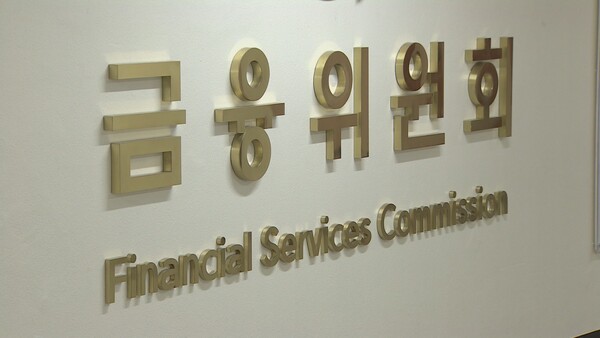
South Korea's Financial Services Commission set next year's general-account spending budget at 9.24 trillion won, up 98.7 percent from this year.
The FSC said on Sept. 1 it drew up its 2027 budget proposal with a focus on boosting future growth potential, stabilising livelihoods for low-income people and supporting youth asset building.
It allocated 1 trillion won to a National Growth Fund to be created at 200 trillion won over five years using an advanced strategic industries fund and private capital. It will be used to support private investment in advanced strategic industries such as artificial intelligence and semiconductors. It will spend 50 billion won on a regional revitalisation investment fund and 5 billion won to support financial innovation start-ups and jobs, including youth fintech.
The total budget for stabilising livelihoods for low-income people is 1.08 trillion won. It will inject 527.4 billion won in government funds into special guarantees for the Sunshine Loan and the Sunshine Loan Youth to provide 2.78 trillion won in policy financing for low-income people.
It will also create a K-Minsaeng Jikim Loan to support emergency funding for low-income people and financially vulnerable groups. It plans to provide 600 billion won in total by adding private capital to 300 billion won in fiscal funding. It will expand and revamp existing loans aimed at preventing illegal private lending by offering an initial 1 million won to people in the bottom 50 percent of credit scores, at an annual 4.5 percent interest rate with a 10-year maturity. It allocated 500 billion won for special debt restructuring for long-overdue debts held by small business owners hit by COVID-19.
It will spend a total of 2.09 trillion won to support youth asset building. It budgeted 146.5 billion won for the Our Child Independence Fund and 1.7 trillion won for the Youth Future Installment Savings. The Youth Future Installment Savings will abolish income requirements for the general type and raise the government contribution rate for the preferential type to 15 percent from 12 percent.
It will spend 88.3 billion won on the Youth Future Home Loan and a combined deposit and rent guarantee for young people, which support purchases of non-apartment homes priced at 400 million won or less. It also budgeted 500 billion won for a fund to support normalisation of project financing sites and 42.2 billion won for rewards for reporting unfair trading and accounting fraud.
The FSC said it plans to continue explaining the purpose and need for the programmes so the budget proposal can be reflected during the parliamentary review process.
 Ji-young Lee
ljy@d-today.co.kr
Ji-young Lee
ljy@d-today.co.kr