
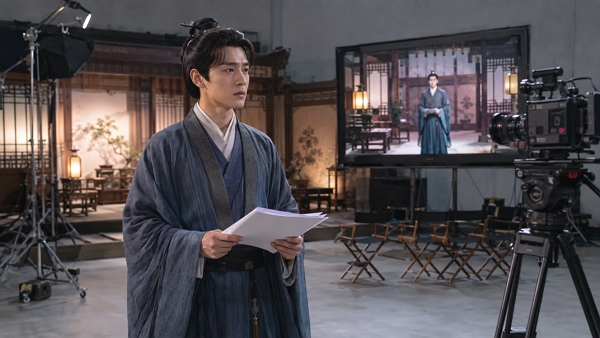
AI is rapidly replacing actors and production staff in China’s short-form content market. Many of the most popular animations and dramas on Douyin, China’s version of TikTok, are filled with AI-made works. Production timelines that once took months are being cut to 1 to 2 days.
On Aug. 31, Japanese media outlet Gigazine reported that DataEye, a Chinese marketing analytics firm, found 89 of the top 100 popular animations and dramas on Douyin in May 2026 were made with AI. ByteDance has also accelerated market expansion by advancing video-generation technology, including releasing multi-shot video generation models such as Seedance 2.5.
The China Netcasting Services Association said about 128,000 short-form dramas were released in China in the first quarter this year, more than triple last year’s annual total. More than 95 percent were counted as works generated by AI without cameras or live-action actors.
The productivity gap is also large. Shen Yang (선양), head of Tsinghua University’s Metaverse Research Institute, said that in 2024 it took 5 people about 3 months to make a 3 to 5-minute drama, but with generative AI one person can produce it in 1 to 2 days. Jilin, an AI animation company that Shen is involved in, released about 8,000 1-minute episodes in May alone and cut production costs to about 10 percent of traditional methods.
Manghe, a content production company in Wuhan, Hubei province, also cut AI drama production costs to about one-third of live action and reduced production time to about one-fifth. On-site actors, however, say filming jobs and pay have fallen. Greg Wollner (그레그 월너), an actor and producer based in Beijing, said digitisation of production sped up sharply after ByteDance released Seedance 2.0 in March, adding that many colleagues around him left the industry.
AI is also making replicas of actors. A cast member in a children’s educational programme said they were told they could either agree to the creation of an AI replica using their face and voice or be replaced by another actor. The person said they ultimately reached an agreement on the terms of a 5-year contract, 1 year’s salary and the right to refuse use.
China’s short-form drama industry directly employs about 690,000 people, and the number of people who make livestreaming their main occupation is estimated at about 15,000,000. AI is sharply lowering content production costs while developing into a new labour issue that is shaking jobs and rights to the images and voices of actors, producers and live-commerce hosts.
 Choi Jae-won
ittt_0801@d-today.co.kr
Choi Jae-won
ittt_0801@d-today.co.kr