
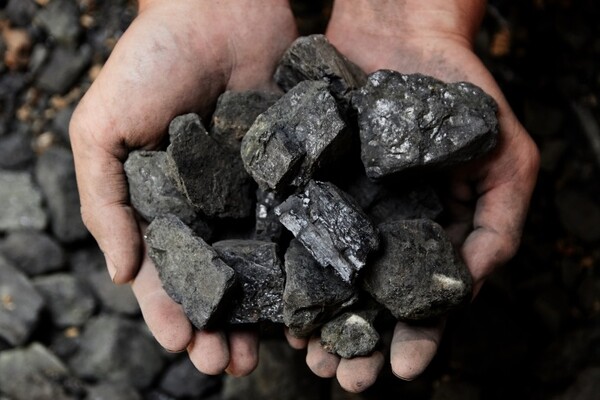
Coal’s position in Poland’s power market is shrinking quickly. As renewables increase generation, coal’s share has fallen by nearly 20 percentage points in four years. Even so, the structure of keeping coal plants as reserve power to support grid stability remains.
CleanTechnica reported on Aug. 30 that coal’s share of Poland’s total power generation fell to 52.7 percent in 2025 from 72.5 percent in 2021. Over the same period, the share of renewables rose to 31.4 percent. Last year, coal’s share fell below 50 percent for five months, and in June renewable generation exceeded coal for the first time on a monthly basis.
Renewables did not fully replace coal’s decline. Natural gas generation also increased rapidly. In 2025, gas generation was 24.4 TWh, onshore wind 23.8 TWh and solar 20.3 TWh. Poland’s decarbonisation is not a simple shift from coal to renewables, but is proceeding in a form where renewables and gas both increase.
A bigger challenge is capacity rather than output. To prepare for hours when wind and solar generation is insufficient and power demand surges, dispatchable generation is needed. For this reason, coal plants with weak economics remain as a kind of insurance.
In a supplementary capacity market auction held last September for delivery in 2026, 7.58 GW was contracted. Under a European Union exemption, high-emissions plants that emit more than 550 kg of carbon dioxide per 1 MWh of electricity could also participate. Similar auctions are scheduled for 2027 and 2028, and the exemption ends at the end of 2028.
Strain on the grid has also grown as renewables expand. Poland curtailed 1.4 TWh of renewable generation last year, about double the level in 2024. Observers point to the need for measures that can shift power by time of day, including transmission expansion, battery storage, cross-border interconnections, demand response, district heating and smart electric vehicle charging.
Supply expansion is also continuing. Poland’s first offshore wind farm, Baltic Power, supplied electricity to the grid for the first time in July. When completed, it is expected to have about 1.2 GW of capacity and annual generation of about 4 TWh, covering about 3 percent of Poland’s current power demand.
A forecast cited by the outlet said Poland’s renewable generation could overtake coal on an annual basis in 2028 and expand to about 53 percent of total output in 2030. Poland’s next task is to go beyond cutting coal output and build a system that can operate the grid stably without coal.
 Choi Jae-won
ittt_0801@d-today.co.kr
Choi Jae-won
ittt_0801@d-today.co.kr