
The standard interface linking Bitcoin Core and hardware wallets, HWI (Hardware Wallet Interface), is effectively entering a wind-down process. By contrast, the Rust-based project BHWI, cited as a successor, has yet to show real-world service deployments, CryptoSlate reported on Aug. 30 local time.
An HWI maintainer said on GitHub on Aug. 18 that HWI had effectively been in maintenance mode for years and was mostly a one-person project. The maintainer said it would no longer accept new devices or features apart from work related to MuSig2. Once that work is finished, it plans to publish a release that is likely to be the last, then continue only minimal maintenance until a viable replacement tool emerges.
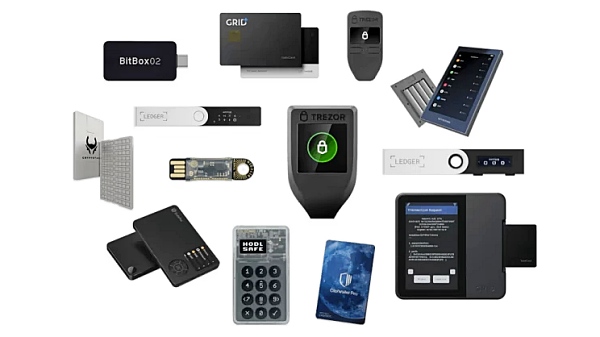
HWI acts as a bridge for wallet software to recognise hardware devices such as Ledger, Trezor, Coldcard, BitBox and Jade, retrieve public keys or display deposit addresses, and send partially signed bitcoin transactions (PSBT) to a device for signing. BHWI, named in the notice as a successor candidate, aims to be implemented in Rust while keeping HWI-style command output intact.
But the transition remains incomplete for both projects. HWI has not yet been moved to an archived repository and no end date has been set, and the notice does not say that supported devices will stop working or that users' bitcoin will be put at risk. The immediate burden falls on wallet development teams that have packaged HWI or called it via the command line to absorb protocol changes by device, operating system and vendor.
HWI, a Python library and command-line tool, unified hardware wallet integration into a single interface that had otherwise required separate implementations by each vendor. Its original purpose was to add hardware wallet support to Bitcoin Core, but it chose to connect through an "external signer" boundary rather than placing HWI itself inside Core. This structure has been supported since Bitcoin Core 22.0 in 2021.
The HWI maintainer explained that because of Python's characteristics, HWI could not be distributed together with Core because it did not fit the reproducible build approach used for Bitcoin Core release binaries. Paradoxically, the separated structure made it possible to replace HWI with other programs as long as they follow the external signer specification.
But a transition is not completed by command compatibility alone. Wallet companies must package replacement tools, retest supported devices and functions, and decide who will handle maintenance in response to future firmware or operating system changes.
 Hyunwoo Choo
cookinpapa@d-today.co.kr
Hyunwoo Choo
cookinpapa@d-today.co.kr