
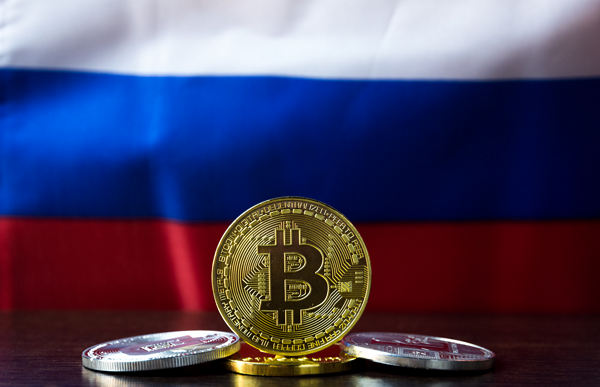
Russia will formally introduce digital rouble payments from Sept. 1 (local time). But using cryptocurrencies directly as a payment method will remain banned, including at major telecom operators, online platforms and key banks.
According to blockchain outlet Cryptopolitan, the core of the policy is to expand a state-controlled central bank digital currency (CBDC) while restricting the payment function of private cryptocurrencies. Russia allows cryptocurrency investment and trading, but has banned paying directly for goods or services in cryptocurrencies. The digital rouble will be introduced as a third form of state currency after cash and non-cash roubles.
The initial roll-out will be led by the telecom industry. Three of Russia's four biggest mobile operators, MTS, Rostelecom and Megafon, will accept digital rouble payments from the first day. MTS will provide the service through its MTS Pay module, and Rostelecom is working with one large bank to upgrade its technology platform. Megafon said the digital rouble is another payment option customers can choose.
E-commerce platforms will also start providing services from the same day. Wildberries and Ozon, Russia's two biggest online marketplaces, will support digital rouble payments from Sept. 1. Ozon said it will gradually widen access, and Wildberries said it is complying with the Central Bank of Russia's requirements.
The schedule coincides with the timing of legal requirements. Under a law that took effect in July 2025, service providers and retailers that deal with major banks and have annual revenue above 120 million roubles (about 1.96 billion won) must introduce digital rouble payments from Sept. 1, 2026. Companies with revenue above 30 million roubles (about 490 million won) will be required to join the same system by September 2027, and the remaining companies by September 2028.
Banks will also be required to provide support from the launch. All 12 of Russia's systemically important banks, including Sber, VTB and Alfa Bank, must support the digital rouble.
Usage conditions are designed around existing banking apps. Individuals can access wallets through their existing banking apps without separate fees, and the Central Bank of Russia is pushing a plan to cap monthly top-ups by bank at 300,000 roubles (about 4.9 million won).
By contrast, directly paying for goods and services in bitcoin or other decentralised tokens will continue to be prohibited. In a consultation document in June, the Central Bank of Russia noted that countries are reviewing national-level stablecoins to protect monetary sovereignty, but proposed maintaining a ban on using stablecoin-like digital financial assets for domestic payments.
The policy contrasts with a trend in other markets to expand the use of stablecoins. The Bank for International Settlements (BIS) warned in its annual report in June that stablecoins do not sufficiently have the characteristics of money and could cause "stablecoin dollarisation" in developing countries. Russia is responding with a digital currency controlled by its central bank from start to finish.
User acceptance remains low. In an online survey conducted in June 2025 by Russian polling agency VTsIOM, 51 percent of respondents said they had no intention of trying the digital rouble, while 35 percent said they were willing to use it. Another 40 percent said it had no advantages over cash and non-cash roubles. In a survey by SuperJob conducted from December 2025 to January 2026, 10 percent said they would receive their full salary in digital roubles, and 5 percent said they were willing to receive part of it. Another 67 percent opposed receiving wages in a new form.
As a result, while Russia's digital rouble expansion has moved into full swing in terms of institutions and infrastructure, whether actual usage spreads will depend on consumer acceptance and how quickly companies embed it in day-to-day operations.
 Yoonseo Lee
yslee@d-today.co.kr
Yoonseo Lee
yslee@d-today.co.kr