
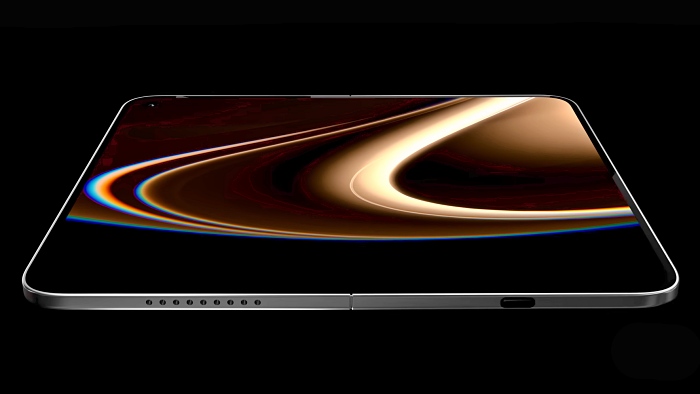
[DigitalToday reporter Jinju Hong (홍진주)] As the likelihood grows that Apple’s first foldable iPhone, widely referred to as the “iPhone Ultra,” will be unveiled at a Sept. 9 event (local time), IT outlet 9to5Mac noted that Apple is entering the foldable market 7 years later than competitors but is aiming to differentiate on completeness.
The most closely watched aspect of the device is the screen quality when unfolded, not when folded. Foldable smartphones have long been seen as involving a key compromise: a crease that remains down the center of the inner display. The iPhone Ultra is reported to focus on minimizing this. Based on leaked information, a “very faint crease” may be visible at certain angles and under certain lighting, but it has been suggested that in normal use the unfolded screen could appear virtually crease-free.
The second point to watch is the balance between thickness and performance. Foldables are structurally prone to becoming thick, and making them thinner often comes at the cost of battery capacity, heat and performance. The iPhone Ultra is expected to have been developed in a direction that reduces such trade-offs. In particular, some observers say last year’s iPhone Air served as a “stepping stone” toward an ultra-thin foldable design.
Battery performance may not last as long as the iPhone 18 Pro Max. Still, it was expected that combining the physical battery specifications with improved power efficiency from the A20 Pro and C2 chips could secure “good enough battery life.” On performance, the application of an A20 Pro and vapor chamber combination has also been discussed as a way to support stable processing performance even in a thin form factor.
The third is the hinge. The hinge is a key component that determines durability and user feel in foldable devices, and some observers say the iPhone Ultra will use liquid metal. Apple licensed the technology more than 15 years ago. At the time, it was seen as something that could be used to make iPhones thinner and lighter, and in 2010 it was also mentioned as being related to foldable phone development.
This time, it has been suggested the technology could be reflected in product design in earnest. A liquid-metal-based hinge is expected to help secure both durability and smooth operation and to contribute to a structure that can withstand repeated use over a long period. Because hinge strength and friction control in foldables are intertwined with screen creases, thickness and durability, it is possible to interpret that Apple put considerable effort into this area.
This trend is also linked to the view that Apple deliberately delayed the timing of its foldable phone launch. Samsung Electronics’ first foldable smartphone was released in 2019. If the iPhone Ultra is unveiled this year, Apple will be entering the market 7 years after competing products. Still, observers say that although Apple could have released a foldable iPhone earlier, it delayed the launch until a quality level befitting the iPhone was in place.
From a market perspective, the iPhone Ultra is expected to be a test of how much Apple reduced factors that have been pointed to as foldables’ weaknesses, rather than a product that simply marks Apple’s entry into the foldable market. If the three challenges of suppressing screen creases, an ultra-thin structure and hinge durability are realized in the actual product, the benchmark for foldable smartphone competition could shift toward hardware completeness.
Once the actual specifications are disclosed at the Sept. 9 event, attention is expected to converge on three areas: how far Apple reduced screen creases, how it managed battery and heat issues within a thin design, and how much a liquid-metal hinge improved long-term usability.
 Jinju Hong
hongjj@d-today.co.kr
Jinju Hong
hongjj@d-today.co.kr