
SpaceXAI will adopt Nvidia's AI CPU Vera at scale, and plans with Nvidia to put an artificial intelligence system designed to run in space into orbit in 2027.
On Aug. 25, foreign media including online outlet Gigazine and Nvidia said SpaceXAI is expanding adoption of Nvidia semiconductors and systems to target next-generation agent-based AI tasks.
The announcement has two main elements. One is large-scale adoption of Nvidia's Vera central processing unit. The other is a plan to develop an AI system tailored for space based on the rack-scale system Vera Rubin NVL72 and mount it on the Starmind satellite.
Nvidia said SpaceXAI's large-scale adoption of Vera will accelerate development of next-generation agent-based AI workloads. SpaceXAI also plans to expand AI infrastructure used for Grok processing to Vera Rubin. It said expanding the Grok infrastructure goes beyond simply adding servers and reflects a move to shift its AI services processing base to Nvidia's latest AI computing system.
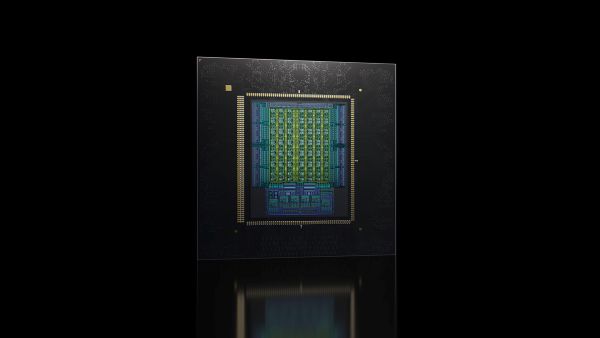
Vera is a CPU specialised for processing AI agents. It includes 88 Olympus Core units designed by Nvidia. According to tests by technology media outlet Phoronix, Vera showed performance exceeding AMD's EPYC and Intel's Xeon. Nvidia expects to improve AI data centre processing performance through a Vera Rubin configuration that combines the CPU with its Rubin AI graphics processing unit.
Plans for a space AI system are also taking shape. Nvidia and SpaceXAI plan to optimise a Vera Rubin NVL72-based system for use in space and load it onto Starmind. Elon Musk (일론 머스크), SpaceX chief executive, said Starmind is scheduled to launch in the fourth quarter of 2027 and that a major scale-up is also planned for 2028.
The plan also ties into SpaceX's broader satellite concept. SpaceX submitted an application to the U.S. Federal Communications Commission in January 2026 seeking approval for a plan to launch 1,000,000 AI data centre satellites. It has applied to regulators for rocket launch approval to deploy up to 1,000,000 AI data centre satellites in Earth orbit by the end of 2027.
The cooperation is drawing attention because it involves both adoption of AI chips for data centres and a plan for satellite-based AI infrastructure at the same time. SpaceXAI is setting up a structure to expand Grok processing infrastructure on the ground and prepare deployment of an AI system in orbit through Starmind. How concretely the 2027 launch schedule and the 2028 expansion plan take shape in line with approvals and system development timelines will be the next point to watch.
 Seung-a Yoo
ysah@d-today.co.kr
Seung-a Yoo
ysah@d-today.co.kr