
The government is broadly reviewing investment targets for a Future Response Fund it is forming from additional tax revenue from a semiconductor boom and other factors, covering not only advanced industries such as AI but also rural and regional projects.
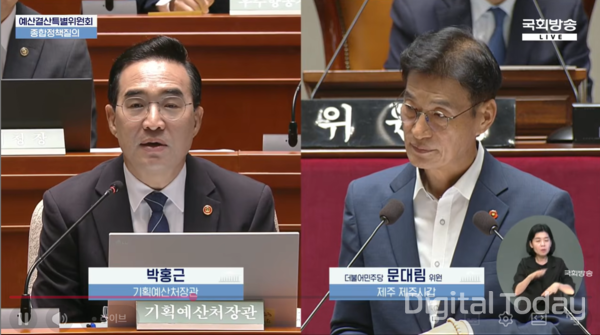
Planning and Budget Minister Park Hong-geun (박홍근) said at a full meeting of the National Assembly's Special Committee on Budget and Accounts on Aug. 24, in response to a question from Democratic Party lawmaker Moon Dae-lim (문대림) about the relationship between the Future Response Fund and the Rural Special Tax, that about 10 trillion won in additional funds had been secured due to a surge in the securities transaction tax. He said the government was reviewing how to ensure the money contributes to rural development or agricultural growth and that budget consultations would take place soon.
When Moon again asked whether rural-related projects would be included in the Future Response Fund, Park replied that the regional sector includes related goals, including improving settlement conditions in rural areas. It means the government is reviewing ways to link the related funds to rural investment, although it has not yet decided whether to incorporate the Rural Special Tax itself into the Future Response Fund.
The Future Response Fund is a fund the government is pushing to create to invest in medium- to long-term growth engines rather than spending additional tax revenue from the semiconductor boom and other factors on one-off expenditures. On Aug. 21, the government disclosed a plan to place a general account and 4 project accounts in the fund: youth, growth engines, local, and education talent.
In the growth engine account, which is directly related to the ICT sector, funds would be投入 into advanced strategic industries such as AI and the government's 3 mega projects. Key support targets include projects aimed at becoming one of the top 3 in AI, such as developing frontier-level AI models, physical AI and AI data centres, as well as infrastructure such as power and water needed for the 3 mega projects. Investments in future technologies such as small modular reactors, space and aviation, and quantum are also included.
Park said on Aug. 21 the Future Response Fund would be used as a strategic investment platform that supports a rebound in potential growth and as a fiscal stabilisation mechanism that eases tax revenue volatility. He said that if revenue falls short or a tax revenue gap occurs, accumulated surplus funds can be used and, if necessary, can also be used to repay government bonds.
The specific size of the fund has not been disclosed. The government plans to detail the fund's size during the process of drafting next year's budget plan and re-estimating revenue.
 Seulgi Son
sageson@d-today.co.kr
Seulgi Son
sageson@d-today.co.kr