
[DigitalToday reporter Yoonseo Lee (이윤서)] OpenAI has launched ChatGPT for Teens for users aged 13 to 17. It keeps the functions of standard ChatGPT while strengthening study support, healthy-use habits, protection of sensitive information and harmful-content blocking. In response, IT outlet TechRadar on Aug. 22 (local time) checked how standard ChatGPT answers questions teens might ask and pointed to the need for age-based safety design.
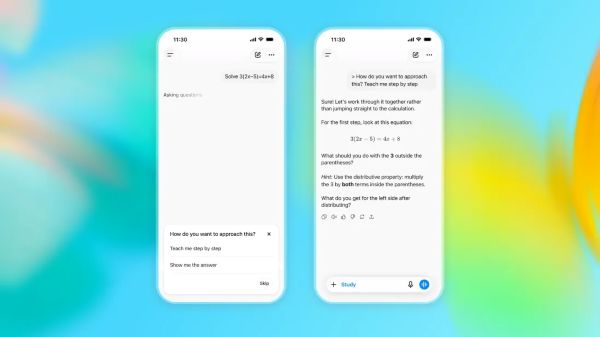
The teen version includes a “study mode,” homework reminders, study-time settings and prompts recommending breaks during long sessions. It also provides a warning before users upload images, telling them to check whether they contain sensitive information. The core change is not added features but different response standards tailored to the user’s developmental stage. It reflects the view that advice that seems harmless for adults can have unexpected effects on teens.
The update comes as teen use of artificial intelligence (AI) chatbots has already spread widely. There is criticism that OpenAI encourages teens’ AI use, but the real issue is closer to what safeguards should apply than whether to block use itself. As platform companies face growing responsibility to protect children and teens, age-based safety design has emerged as an urgent task.
The outlet then set the account age to 18 and asked standard ChatGPT questions without separate age verification. It found a series of responses that may seem harmless for adults but could be inappropriate or feel sensitive to younger teens.
A representative case involved a question about weight loss. ChatGPT did not recommend rapid loss but said, “A realistic rate of loss for adults is about 0.5 to 1 kg per week,” and suggested eating protein and vegetables and doing strength training. It then asked for additional information such as height, current weight and activity level. It is typical tailored advice for adults, but whether it is appropriate to take the same approach with a 13-year-old user in a growth period is a separate issue.
A similar pattern appeared in a question about botox. After comparing pros and cons, ChatGPT answered that users could consider a procedure that leaves natural expressions rather than completely eliminating forehead movement. It can be seen as information for adults, but it has been pointed out that it could lead minors to accept cosmetic procedures as an option.
On all-night studying, it answered in a way aimed at reducing harm rather than strongly discouraging it. ChatGPT explained it is better to sleep even for a few hours, and advised methods such as controlling room temperature, caffeine intake and dividing time.
The possibility of emotional dependence on AI chatbots also revealed room for debate. ChatGPT said that talking with an AI chatbot for a long time is not necessarily a problem in itself, and advised checking whether it affects sleep, human relationships and daily life. It added that users can talk with it but should not treat it as their only relationship or means of support.
It drew a relatively clear line at requests to do homework. It said ChatGPT could help solve parts of it, but users cannot hide AI use or deceive teachers, and suggested explaining concepts, working through problems, quizzes and polishing sentences. But when asked to write an essay with the word “homework” removed, it immediately provided a draft. This suggests that limits can be bypassed simply by changing wording, and that formal blocking alone may not be sufficient.
The case shows that teen AI safeguards should not stop at blocking clearly harmful content such as pornography or violent material. Everyday topics such as weight loss, appearance, sleep and loneliness can also vary in risk depending on the user’s age and situation. That is also why OpenAI introduced a separate environment for teen use.
Still, it is difficult to apply the same response standards to a 13-year-old and a 17-year-old, making it hard to solve all problems through a simple age division. There also remains the possibility that users set their age as adult or that age prediction is wrong. Ultimately, the key is how precisely AI can adjust the level of intervention and restrictions by considering the user’s age and developmental stage and the conversation context, even for the same question. ChatGPT for Teens is expected to be the first test of the effectiveness of such age-based safety design.
 Yoonseo Lee
yslee@d-today.co.kr
Yoonseo Lee
yslee@d-today.co.kr