
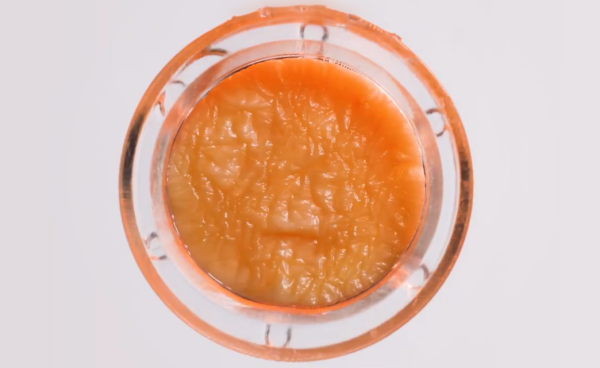
A platform that uses human skin discarded after surgery to train AI models while keeping the tissue alive outside the body for up to a month has been unveiled. It combines real human tissue with AI to find new cosmetic ingredients and is also drawing attention as a technology that could replace animal testing.
TechCrunch reported on Aug. 22 that Outer Bioscience has built a closed research system to discover new cosmetic ingredients based on live human skin data.
Outer Bioscience was founded in 2022 by Michael Polansky. The company secures skin tissue that would be discarded after plastic surgery and other procedures through nonprofit and commercial biobank networks.
Instead of directly purchasing the tissue, it pays a cost-recovery-based fee. Donor information is removed from samples it receives. The company has built a supply chain for about 2 years so it can obtain and process tissue within hours after surgery.
The core technology is keeping secured human skin alive for up to a month. The company uses its in-house support system to supply nutrients to the tissue and remove waste produced during metabolism.
Polansky explained that in the existing industry, tissue maintenance typically lasts only a few days, making it easy to focus on checking for acute toxicity. He said Outer Bioscience's system can keep tissue alive for up to 30 days.
The company said much of the structure and molecular programs from the first day are preserved even after 30 days. That means it can more precisely verify how substances affect skin while observing living human tissue over a longer period.
The company also combines AI. When its AI model predicts untested chemicals that could help specific skin functions, the company applies those substances to living human skin.
The experimental results are then fed back into the AI model. Both correct and incorrect predictions are used as training data. That creates a cycle in which AI predicts, tests are run on real tissue and the results are used to train the model again.
The company said it has also sped up how quickly it finds candidate substances. Polansky said that early on, when it searched scientific papers and looked for natural compounds, it could identify only a small number of candidates over 18 months.
After introducing AI, he said it can generate new candidate substances about every 6 weeks. The current pipeline includes 6 leading candidates and dozens of additional exploration results.
Outer Bioscience is focusing first on cosmetic ingredients rather than drugs. Instead of developing drugs that require U.S. Food and Drug Administration approval, it chose a path of commercialising ingredients by securing an industry standard name and conducting safety tests under Organisation for Economic Co-operation and Development guidelines.
It plans to license or sell completed ingredients to beauty companies or drugmakers rather than launching them under its own cosmetics brand. Polansky said 4 of the 6 leading candidates currently have a high likelihood of commercialisation.
Monetisation has already begun. The company is generating revenue through joint research, and some drugmakers are using Outer Bioscience's data to study why certain cancer drugs cause severe skin rashes.
Consumer beauty brands are also testing the data to verify standards used in their product development or marketing, the report said.
The approach is also drawing attention in competition over technologies that can replace animal testing. That is because combining real human tissue with AI to test new drugs or cosmetic ingredients is emerging as a new preclinical research method.
Competition is also intensifying. Philadelphia-based rival VivoBiome announced this month that it has raised a total of about $80 million by promoting a technology that combines predictive AI with lab-grown human organ tissue. Other companies are also targeting the preclinical testing market using organ-on-a-chip and microphysiological systems.
Outer Bioscience sees its competitiveness in the fact that its data does not exist outside the company. Polansky stressed: "Unlike typical AI that collects data from the internet, there is no biological internet to scrape in biology."
Because it handles sensitive biological data, the company is currently conducting all AI work in an on-premises environment rather than in the cloud.
The company has raised about $23 million so far. Early investors included KAM Capital, Brierter Capital and Cocktails, Polansky's investment firm. It has 19 employees.
Outer Bioscience, which had not been widely known externally, has also begun making public moves in connection with its accumulated data. Polansky said it is difficult to keep conducting research in secrecy and that he now wants to conduct the business openly.
A future task for the company is to connect promising ingredients found by AI to real products. The next step is expected to be building a product development organisation responsible for formulation and scaling up production, building a supply chain and verifying safety after identifying candidate substances.
 Jinju Hong
hongjj@d-today.co.kr
Jinju Hong
hongjj@d-today.co.kr