
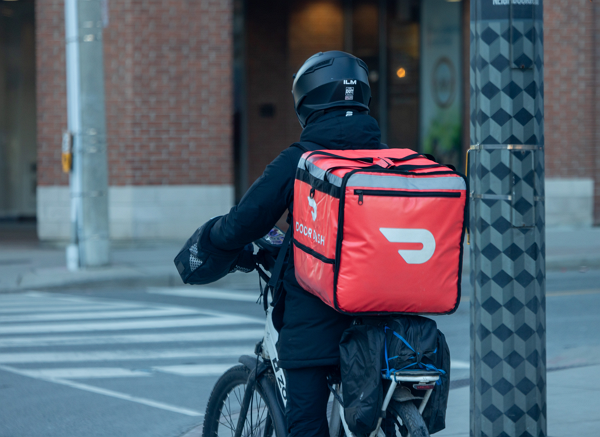
U.S. consumers are becoming increasingly cautious about spending, but they are still opening their wallets for food and grocery delivery, a report showed. An analysis says the convenience of saving time is supporting delivery demand despite high fees.
Business Insider reported on Aug. 23 that DoorDash, Uber Eats and Instacart showed resilient delivery demand in their recently announced second-quarter results. DoorDash revenue rose 36 percent from a year earlier to $4.454 billion, and orders increased 27 percent to 970 million. Instacart also said revenue and gross transaction value each rose 14 percent. Uber's delivery segment gross bookings increased 26 percent to $27.463 billion.
That contrasts with recent signs of a U.S. consumer slowdown. U.S. retail sales in July fell 0.6 percent from the previous month, the first decline in nine months. Walmart's comparable U.S. sales in the second quarter rose 2.6 percent, the slowest growth rate since 2020. Restaurant sales, however, increased 0.5 percent in July, showing that food-related spending remained relatively resilient.
Delivery companies are widening their service scope to draw demand. DoorDash is expanding partnerships with local grocery stores and has added major retailers, including Kroger, to its platform. DoorDash Chief Financial Officer Ravi Inukonda (라비 이누콘다) said, "People eat 21 times a week, whether it is food or groceries," and explained that food spending is more resilient than other categories.
Convenience is the biggest reason consumers are willing to pay delivery fees. Users interviewed by the outlet said the extra cost is worth it given the time spent on grocery shopping and travel, as well as preparing food and doing dishes. For people who find it difficult to use a car, delivery can go beyond simple convenience by reducing transportation costs and helping independent living.
Some also said they used delivery 3 to 4 times a week during the COVID-19 pandemic but have now cut back to 1 to 2 times a month. That suggests not all consumers are maintaining delivery spending. Even so, major platforms' results show that many consumers are still paying for the cost of buying time even as overall consumption slows.
 Choi Jae-won
ittt_0801@d-today.co.kr
Choi Jae-won
ittt_0801@d-today.co.kr