
As AI evolves into a "digital employee" that carries out real work, calls are growing to extend people-centred compliance monitoring and internal controls to AI.
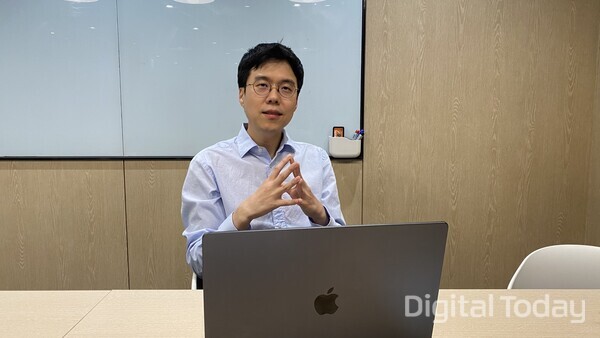
Minseung Kang (강민승), CEO of Tinaps, recently met with a reporter and said, "AI getting smarter and companies allowing how far they can use AI are completely different issues." He said it becomes important who will carry out internal controls on AI agents once they begin performing work.
Kang said it is time for an "AI compliance officer," likening it to compliance monitoring systems applied to human employees.
He said existing internal controls were designed around people. He said once AI agents perform a significant portion of work, it will be difficult for people to track and control everything, adding that this area is currently empty.
He said finance in particular needs a system to filter AI answers and actions before they are executed, because even small errors can lead to incidents.
Kang cited a case at a financial company where AI, while guiding retirement pension tasks, generated a remittance code that did not exist. The error was found in back-end monitoring before an actual transfer, but he said it could have spread into a financial accident if it had not been filtered in time.
To prevent this, Tinaps conducts separate verification at the runtime stage before AI answers and actions are executed. It judges simple matters with rules, and in complex cases multiple lightweight models cross-verify results. Areas that AI finds difficult to judge are handed over to people.
It also uses a "self-critic" method in which multiple verification models repeatedly doubt and confirm results. The structure reflects company-specific work standards and model answers, and improves verification performance by accumulating errors found in operations back into data.
Kang said, "AI produces answers probabilistically, but corporate decision-making should not go by probability." He said it is not acceptable for a different decision to be made once out of 100 times. He added, "It would be a lie to say AI prevents accidents 100 percent," and said the key is setting standards for how far AI can judge and from what point to hand it over to people.
Speed is as important as accuracy in the verification process. If verification significantly delays responses or work processing, it becomes difficult to apply it to real services.
Kang said, "Korea's algorithm talent has strength in deciding within short latency whether to do something or not." He said he saw models that judge AI decisions with high precision in a short time as an area where Korean developers can be competitive.
The difference from existing large language model guardrails is the scope of verification. While existing solutions mainly focus on "input guardrails" that block external attacks such as prompt injection or jailbreaking, Tinaps also addresses "output guardrails" that verify cases where AI produces wrong answers or actions even after receiving normal requests.
Kang defined Tinaps as an "AI reliability infrastructure startup" and said the key is real-time verification of whether there are problems before AI agent answers are delivered or actions are executed.
It is also important to reflect differing internal rules and work standards at each company. Even within the same financial company, the rules and permitted scope that AI must follow differ by task, including retirement pensions, personal and corporate lending, deposits, foreign exchange and anti-money laundering (AML).
Kang said, "Models keep changing, but corporate standards should not change along with them." He said it is important to build governance that can operate under the same standards regardless of which model is used.
Tinaps was selected for a project for nine KB Financial Group affiliates after a proof of concept with KB Kookmin Bank. Based on that, it is expanding its business to financial companies and large corporations. Microsoft is also supporting customer expansion and entry into global business.
Kang said controls will become more complex in a "multi-agent" environment where multiple AI agents collaborate. Even if each agent moves according to its own goal, he said the overall system can produce results that conflict with each other.
Kang gave the example of loan inquiry and loan screening agents. He said a higher-level control system is needed to coordinate them, since the inquiry agent's goal is to increase product proposals while the screening agent's priority is to lower default risk.
He said, "The more it moves toward multi-agent, the more a 'supervisor' role is needed to manage it." He said the area of controlling each judgment and action will become important as AI gains more authority.
Kang pointed to "trust" as a key factor that will determine the future spread of AI in companies. He said companies are actively investing in infrastructure such as high-performance GPUs and AI models, but systems to decide to what level decision-making will be entrusted to AI are still lacking.
He said, "AI is getting smarter, but the reason companies cannot use it as much is not a GPU or model problem, but because it has not been decided how far it can be allowed to be used." He said for companies to entrust real work to AI, trust and control systems must be in place along with performance.
 Seulgi Son
sageson@d-today.co.kr
Seulgi Son
sageson@d-today.co.kr