
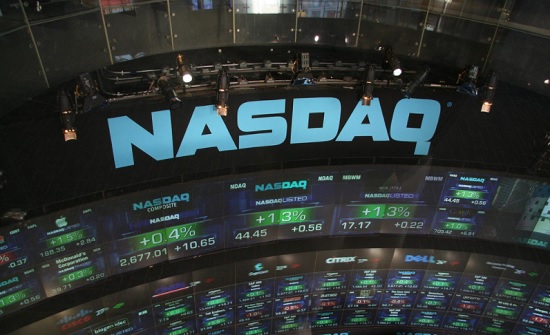
Nasdaq will switch from Dec. 6, 2026 to a system of trading U.S. stocks 23 hours a day, five days a week. Coinpost, a blockchain outlet, reported on Aug. 20 local time that Nasdaq disclosed the plan in 8-K-related materials filed with the U.S. Securities and Exchange Commission.
Trading hours will jump from about 16 hours now. Only 1 hour of downtime will remain for system checks and the changeover between trading days. The U.S. Securities and Exchange Commission approved the proposal on April 10. Actual operations, however, require updates to the clearing system of the U.S. central securities depository DTCC and to securities information processor, or SIP, infrastructure.
The new system will operate in two sessions, daytime and nighttime. The daytime session will run from 4 a.m. to 8 p.m. Eastern time. After a 1-hour break, the nighttime session will run from 9 p.m. to 4 a.m. the next day. Chuck Mack (척 맥), senior vice president in charge of Nasdaq's North American markets, explained that the overhaul aims not only to extend hours but also to broaden market access for more investors.
The nighttime session covers daytime hours in major Asian markets. That reduces the need for Asian investors to plan trading rhythms around New York time. Foreign investors' holdings of U.S. stocks have risen 97 percent since 2019 to reach $17 trillion in mid-2024. Nasdaq is now able to draw in cross-border funds and order flows from the Asia-Pacific region.
The move also ties into competition with tokenised stocks. Tokenised stocks are financial products that issue and trade on a blockchain rights linked to actual shares. Their strengths are cited as 24-hour, 365-day trading and faster settlement. Platforms such as Hyperliquid and Binance are seeing users, mainly younger investors, flow in.
The share of tokenised stocks is also growing. Data from The Block showed tokenised stocks' share in the real-world asset market rose to 14.9 percent, about 2.9 times the 5.1 percent at the start of the year. By RWA.xyz's tally, the number of holders over the past 30 days rose 90.33 percent to 1.35 million, and monthly transfers climbed 191.1 percent to $23.81 billion. Ondo Finance ranked first at about $870 million, followed by Binance's bStock and xStocks. The top three services account for about 77 percent.
In the short term, overnight trading can provide tokenised stock market makers with a stable price benchmark. After traditional markets closed, it had been difficult to reference continuous spot prices, raising hedging costs and sometimes leading to wider bid-ask spreads or weaker DeFi oracle price quality.
In the long term, the competitive axis is expected to shift as the advantage in trading hours weakens. The focus moves to how far shareholder rights such as voting rights and dividends can be provided, and how efficiently settlement can be streamlined. Nasdaq also received U.S. Securities and Exchange Commission approval in March 2026 for a trial introduction to trade and settle Russell 1000 constituents and major stock index ETFs in tokenised form. The 23-hour trading system will serve as a test bed to check the stability of overnight clearing, market making and risk management systems.
 Hyunwoo Choo
cookinpapa@d-today.co.kr
Hyunwoo Choo
cookinpapa@d-today.co.kr