
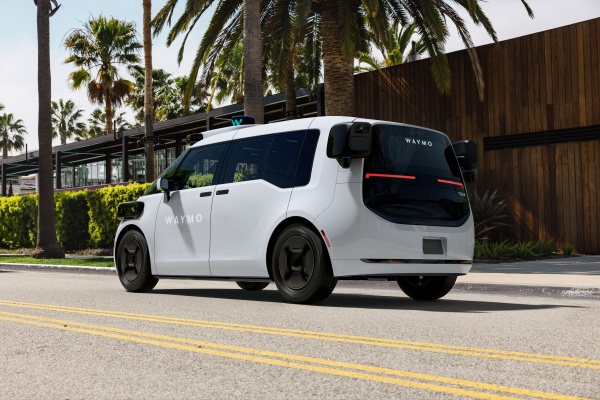
As autonomous robotaxis are deployed more widely in real-world operations, cases are increasing in which robotaxis cause problems in unexpected situations.
As the number of edge cases rises, in which self-driving taxis have not been trained to respond to unforeseen situations, they are not only disrupting traffic flow but also sometimes creating scenes that can threaten safety.
Some edge cases are also widely covered by the media. A power outage in San Francisco in December last year that left about 1,600 Waymo vehicles stopped for at least 2 minutes also made headlines.
According to a recent New York Times report, Waymo, the robotaxi service company under Google's parent Alphabet, has expanded the number of self-driving taxis it operates to about 4,000. That is more than a five-fold increase from 700 at the start of last year. Waymo vehicles are deployed in 15 city-centre areas, and last month switched to fully autonomous driving in Denver, Las Vegas, San Diego and Tampa in the United States alone.
Google is accelerating its expansion into multiple cities without having to retrain software for each area, as software developed for one area increasingly works better in other areas, the New York Times reported, citing Franklin Trujillo, head of Waymo's new city expansion team.
As they operate in more and more cities, self-driving cars are bound to face situations they have not experienced, increasing the possibility they will cause problems.
Waymo has carried out federal recalls three times since December last year due to software issues. Considering it conducted only three recalls in the previous 22 months, the number has surged in a short period. The three recalls included a case in which a vehicle entered a flooded road.
On July 4 local time, Waymo driverless vehicles also blocked intersections and paralysed traffic flow along the San Francisco waterfront, where more than 100,000 people gathered to watch fireworks. Some vehicles were stuck for more than 3 hours, and there were even incidents in which they were towed due to depleted batteries or caught fire after running over fireworks.
Philip Koopman (필립 쿱먼), a professor emeritus at Carnegie Mellon University who has specialised in research on self-driving cars, said the problem is that vehicles often do not realise they are in trouble and do not ask for help. "Autonomous driving technology has difficulty recognising that it is in a new situation. When it is placed in a new situation, it becomes overly confident and is prone to making absurdly stupid mistakes," he said.
With a string of accidents, the mood is that scrutiny by authorities and regulators targeting Waymo is also intensifying, at least for now.
San Francisco Mayor Daniel Lurie also sent a letter to the California transportation secretary requesting the creation of operating standards that driverless vehicles must follow during large-scale events or emergencies. "Regulations that assume only ordinary situations are no longer sufficient," he said.
Waymo spokesperson Sandy Karp said, "Recent recalls were proactive measures, and as the company expands its business, the rate of edge cases is also declining. Issues that occur in practice are reflected in continuous improvements." Trujillo said, "Waymo's goal is to create technology that can respond to all edge cases regardless of whether it has experienced them before," adding, "Waymo's rate of serious injury accidents is 94 percent lower than human drivers. Waymo is constantly learning and improving its product."
 Chi-gyu Hwang
delight@d-today.co.kr
Chi-gyu Hwang
delight@d-today.co.kr