
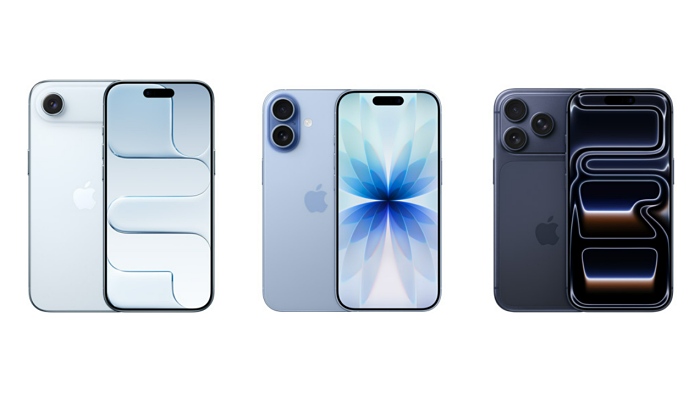
[DigitalToday reporter Yoonseo Lee (이윤서)] The iPhone has expanded the range of changes over the past 5 years beyond internal performance to include the display, buttons, camera, charging port, operating system (OS) and software design. Annual updates may appear minor, but an assessment said the scale of change is clear when viewed together since the iPhone 13 series in 2021.
On Aug. 11 (local time), IT outlet Engadget reviewed key elements of the iPhone that have changed over the past 5 years.
The key is the changes that have accumulated year by year. Smartphones often show little difference by generation, making it hard to feel a gap even with the two latest models side by side. But when the comparison period is widened to 5 years, the changes become clearer.
The iPhone 13 series, released in 2021, is cited as the starting point of the changes. Since then, the iPhone has made successive adjustments to the display configuration, device controls, camera functions, charging interface, OS experience and software design. The scope of change has grown in recent years as even some long-standing elements have shifted.
Changes have also emerged in product-line strategy. As some features once limited to Pro models began to expand to standard iPhones, the feature gap between higher-end and regular models narrowed in part. An analysis said Apple has adjusted the allocation of features within its lineup by expanding Pro features to standard models step by step during generational transitions.
The camera and software were also cited as key pillars of recent iPhone changes. It means that upgrades are no longer just about higher chip performance, as shooting functions and interfaces that users feel have changed along with it, shifting the criteria for deciding whether to upgrade. OS and design changes may be less noticeable than hardware, but they are cited as elements that have a significant impact on the actual user experience.
The change in the charging port was also presented as a symbolic shift that distinguishes the past 5 years. Because Apple’s proprietary Lightning port was one of the elements long maintained on the iPhone, the switch to USB-C is seen as more than a simple parts change.
Changes to the mute switch button are in the same context. That is, even if there seems to be no big difference in appearance, the way the device is used has been steadily refined.
These changes are expected to continue. In the next iPhone series, expected to be unveiled within a few months, changes could appear more pronounced compared with models from the early 2020s. Even if generational changes do not look large, looking at them as accumulated over a certain period shows more clearly how Apple’s product strategy and user experience have changed.
In the end, the iPhone’s changes over the past 5 years are hard to explain as simple performance improvements. Changes have accumulated across the display, buttons, camera, charging port, OS and software design, while Pro features have gradually expanded to standard models. That suggests the benchmark for iPhone evolution is broadening beyond hardware specifications to the overall user experience.
 Yoonseo Lee
yslee@d-today.co.kr
Yoonseo Lee
yslee@d-today.co.kr