
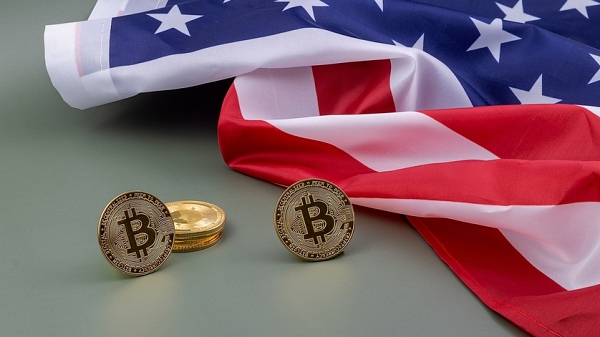
More than a year after the U.S. government launched a strategic bitcoin reserve fund, controversy continues as its actual holdings remain undisclosed.
As of Aug. 8 (local time), blockchain media outlet CryptoSlate reported that market estimates of U.S. government bitcoin holdings vary widely, ranging from about 200,000 BTC to the 320,000 BTC range. It is difficult for outsiders to verify what amount the government recognises as strategic reserves.
U.S. President Donald Trump signed an executive order on March 6, 2025 to establish strategic bitcoin reserves. At the time, the White House set out a policy of not selling bitcoin held by the government in principle. It also directed federal agencies to report their digital asset holdings and custody accounts to the Treasury Department within 30 days. The Treasury was instructed to review within 60 days the location and management of the reserve accounts and whether congressional approval was needed, among other matters.
The problem is that even after a year, the government has not disclosed how much bitcoin it can actually include in the reserves. When the reserve plan was announced, White House crypto adviser David Sacks (데이비드 색스) said the federal government held about 200,000 BTC. By contrast, as of July 2026, Arkham estimated U.S. government holdings at about 324,000 BTC, while Bitcoin Treasuries put it at 328,372 BTC. Using a reference price of $62,761, the gap between 200,000 BTC and 320,263 BTC is 120,263 BTC, worth about $8.18 billion.
Such differences do not mean the government has lost bitcoin. Blockchain analytics firms can track movements and balances of wallets linked to the government, but they cannot confirm the ultimate legal ownership of those assets.
To be included in strategic bitcoin reserves, the bitcoin must belong to the Treasury and the final forfeiture process must be completed. It must also not be tied to separate legal obligations such as victim compensation or law enforcement. That is why not all bitcoin held in wallets linked to the government can be counted as reserves.
More than 94,000 BTC recovered from the 2016 Bitfinex hack is a leading example. That amount has been included in some estimates of federal government holdings, but procedures related to victim compensation and ownership remain under way. If about 94,643 BTC is returned, external estimates of government holdings could drop by close to 30 percent without any additional sales.
Confusion also grew after the Justice Department announced in October 2025 that it had secured about 127,271 BTC linked to Chen Zhi (첸즈), the founder and chairman of Cambodia's Prince Group. Prosecutors described it as the largest forfeiture lawsuit ever.
In timing and scale, it overlaps substantially with estimates showing government holdings jumping from about 198,000 BTC to more than 324,000 BTC. What the Justice Department disclosed, however, was that a civil forfeiture suit had been filed and that the federal government was holding the assets. That is different from saying the government has obtained final ownership without any legal constraints. Public records make it difficult to confirm whether final forfeiture has been completed, whether the assets are free of victim claims, or whether they have been moved to Treasury-managed accounts.
This opacity is directly affecting market interpretations. On July 15, about 3,941 BTC and 37,000 ether moved from government-related wallets to Coinbase Prime over roughly 8 hours. Arkham valued the transfer at about $288.33 million.
It is not confirmed whether the transaction was a simple custody transfer, asset consolidation or administrative processing, a legally permitted disposal preparation, or an actual sale. Since the U.S. Marshals Service has selected Coinbase Prime as a provider of large-scale digital asset custody and advanced trading services, transfers to the same destination can carry different meanings. It is difficult to label it as a sale without evidence, but there is also not enough basis to interpret it as a simple custody transfer.
The U.S. government also operates a separate digital asset reserve for assets other than bitcoin. But as the scope of managed assets expands, it becomes harder to grasp the total size. It has not disclosed which agencies reported what assets, how many of those assets meet final forfeiture criteria, or how much has been placed in Treasury-managed accounts and reserve accounts.
In July 2025, the White House said in a 166-page digital asset report that the Treasury manages reserve and custody accounts, seized assets are a key funding source, and bitcoin is not sold in principle. But it only said the Treasury submitted its review items on establishing and managing the reserves to the White House, without disclosing agency-by-agency holdings or final included balances.
In Congress, the '2026 U.S. Reserve Modernization Act' has been introduced. The bill would consolidate digital assets held by the federal government into the Treasury and mandate quarterly proof-of-reserves reports, third-party audits and congressional oversight. It also includes a plan to require a minimum holding period of 20 years for strategic bitcoin reserves. The bill remains at the proposal stage, limiting its ability to resolve the current dispute over holdings.
Ultimately, the key is clearly confirming the amount of bitcoin the government actually holds, rather than whether it makes additional purchases. That is why there are calls for the Treasury to disclose breakdowns, including fully forfeited amounts, seized amounts under litigation, assets tied to victim compensation or creditor claims, amounts transferred to the Treasury, amounts included in reserve accounts, and amounts disposed of under exception clauses.
The bitcoin market has stressed the principle of "Don't trust, verify," but information that can be externally verified about the U.S. strategic bitcoin reserves is limited. Wallet addresses and private keys may not be disclosed for the security of national reserve assets, but keeping even total holdings undisclosed leaves the challenge of maintaining market trust.
 Yoonseo Lee
yslee@d-today.co.kr
Yoonseo Lee
yslee@d-today.co.kr