
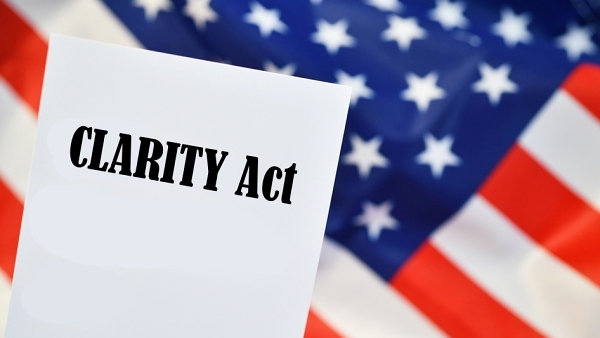
Negative perceptions of the cryptocurrency industry among U.S. Democratic supporters are adding to the burden of handling the CLARITY Act, a crypto regulation bill facing a procedural vote this week. The industry is highlighting progress in bipartisan talks, but intra-party backlash is emerging as a variable in Senate vote counting.
On July 31 (local time), blockchain outlet U.Today reported that a poll conducted by Democratic research firm Nornington Petts found 84 percent of Democratic primary voters took an unfavorable view of candidates backed by the crypto industry.
The survey showed the cryptocurrency industry received more negative ratings than other major industries such as oil companies, Wall Street banks and data centres. That suggests Democratic lawmakers who support crypto could clash with the sentiment of voters within their party.
The poll was released as the CLARITY Act has emerged as a top legislative priority for the crypto industry. The bill, which sets out to clarify regulatory authority over digital assets and market structure, has drawn industry attention. The industry, however, is taking a cautious view on whether the poll will translate into real political influence.
One industry official argued that there are few opposing voters who cast ballots based solely on crypto issues, saying, "The only people who vote on this issue are pro-crypto voters." Pro-crypto political fundraising group Fairshake also explained it can reach voters by using broader election agendas than digital assets themselves.
Negotiations on the bill are still under way. SkyBridge Capital founder Anthony Scaramucci said Senators Thom Tillis and Ruben Gallego negotiated a "very strong bipartisan ethics provision." He argued it is highly likely President Donald Trump will agree to the final bill, saying, "Who can stand in the way of CLARITY?"
Coinbase Chief Policy Officer Faryar Shirzad also offered a positive outlook on the bill's chances of passage. He stressed that "the ethics issue has been resolved, the appointments issue has been resolved, and a bipartisan bill has been prepared on the core content as well."
Digital asset manager Grayscale also urged senators to hold a floor vote before the August recess. In a letter, Grayscale called for the bill to be advanced, saying key issues including jurisdiction, investor protection and developer safeguards have been discussed for months.
But opposition voices among Democrats remain. Some Democratic senators, including Mark Warner, Ruben Gallego, Angela Alsobrooks, Cory Booker, Catherine Cortez Masto, Raphael Warnock and John Hickenlooper, criticised the Republican draft in a recent joint statement as "falling short of the standard."
In particular, Senator Elizabeth Warren, the top Democrat on the Senate Banking Committee, is seen as the most hardline opponent of easing crypto regulation.
Markets are also not assigning high odds to the CLARITY Act's final passage. On prediction market Polymarket, the likelihood that the bill secures at least 60 votes in the final stage was priced at 34 percent. The chance of more than 58 votes was 48 percent, while the chance of more than 55 votes was tallied at 52 percent. That suggests uncertainty remains high over whether the bill can secure enough Democratic crossover votes needed for passage.
Ultimately, the CLARITY Act's fate is expected to hinge on how much anti-crypto sentiment within Democrats can be softened and whether bipartisan negotiations can be turned into momentum for a vote. The industry is pushing to advance the bill by foregrounding ethics provisions and investor protections, but the gap between party sentiment and congressional vote counting remains a variable.
 Jinju Hong
hongjj@d-today.co.kr
Jinju Hong
hongjj@d-today.co.kr