
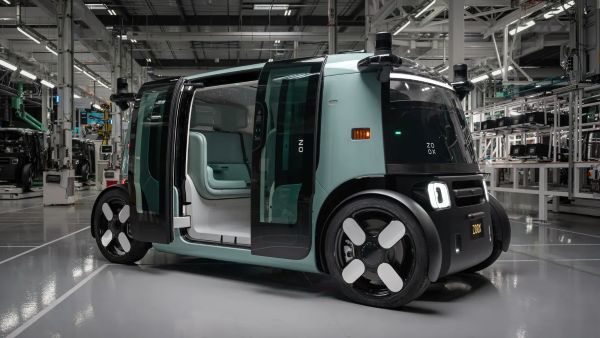
The United States has allowed paid operations of Zoox robotaxis built without a steering wheel and pedals.
On July 30 local time, multiple foreign media outlets including electric vehicle publication InsideEVs reported that the move allows Zoox to begin commercial service under a temporary exemption from federal motor vehicle safety standards.
The approval allows Zoox to deploy up to 2,500 vehicles a year for the next 2 years. The vehicles are purpose-built autonomous vehicles that do not have elements required in ordinary cars such as a steering wheel, brake pedal and side mirrors. Zoox said it was the first time this type of purpose-built autonomous vehicle received a federal standards exemption and won approval for commercial deployment.
Zoox has so far offered only free rides in parts of Las Vegas and San Francisco. With a path now open to shift to paid service, the business stage moves from pilot operations to commercialization. Zoox said on July 30 it plans to start charging fares in Las Vegas from next month.
Actual paid operations are also tied to state government licensing. In California, permits from the Department of Motor Vehicles and the Public Utilities Commission are required to begin paid service. Zoox said it is preparing to transition to commercial operations while working closely with regulators in both regions.
The vehicle design also differs from existing robotaxis. Unlike Waymo, which modifies Jaguar I-Pace electric vehicles, and Tesla, which is testing a Model Y-based robotaxi service, Zoox designs and produces its vehicles in California. The interior has two rows of bench seats facing each other, and the vehicle can drive in both directions.
The move could also become a benchmark for competitors. Tesla's Cybercab also has no steering wheel or pedals and needs similar approval. Cruise, an autonomous driving startup once owned by General Motors, sought an exemption approval for its Origin shuttle but did not receive it.
The National Highway Traffic Safety Administration, or NHTSA, also announced changes to the framework for autonomous vehicles alongside the Zoox approval. It issued an interim final rule to allow vehicles produced before an exemption approval to be included in commercial deployment, and said it will simplify the exemption application process. It will also support a 3-year consultative body with the SAE Industry Technologies Consortium and begin work on nationwide unified standards for autonomous vehicle performance and safety.
Jonathan Morrison (조너선 모리슨), head of NHTSA, said in a statement, "NHTSA supports the safe development and deployment of autonomous vehicles. By removing unnecessary barriers to innovation, developing industry guidance, and providing strong enforcement oversight while developing performance requirements, we are taking a balanced approach to autonomous vehicle regulation." He added, "These advances will help the United States continue to lead the world in autonomous driving technology in a safe and responsible manner."
The measures could also ease some of the burden on the U.S. autonomous driving industry of having to meet state-by-state and local rules separately. With Zoox's approval for paid operations and the regulatory changes happening at the same time, the race to commercialize purpose-built autonomous vehicles is moving to a stage that requires clearing both federal standards and state licensing, as well as vehicle design.
 Seung-ah Yoo
ysah@d-today.co.kr
Seung-ah Yoo
ysah@d-today.co.kr