
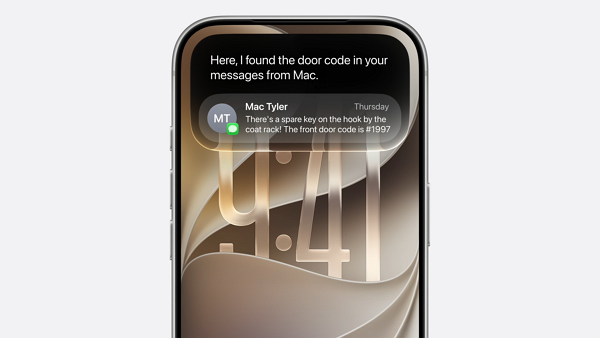
Apple has started introducing artificial intelligence features in the China market, but a full rollout of next-generation Siri AI, seen as a key function, is likely to take more time.
On July 31 local time, the South China Morning Post reported that Apple CEO Tim Cook (팀 쿡) said on an earnings conference call that Apple had begun distributing some Apple Intelligence features to mainland China users and that Siri AI was at a stage requiring further development.
Features being provided to China users include Clean Up, which removes unwanted objects from photos. Cook said, "We are currently rolling out those features," and added, "Siri AI needs more work going forward, but it is now at the starting stage."
The rollout follows approval by Chinese regulators earlier this month for Apple Intelligence. Apple is working with local companies such as Alibaba Group Holding and Baidu to provide AI services in China. This means Apple Intelligence, which was introduced first in other countries, is expanding to the China market after about 2 years.
The China market is seen as an important region in Apple's AI strategy. As the world's largest smartphone market and competition over AI heats up among local makers such as Huawei and Xiaomi, Apple is also highlighting AI functions as a key factor in strengthening competitiveness. But Apple's China business results this quarter fell somewhat short of market expectations.
Apple's revenue from mainland China, Hong Kong, Taiwan and Macau rose 22 percent from a year earlier to $18.8 billion in the quarter ended June 27. But it fell short of the market estimate of $19.6 billion. Over the same period, total revenue rose 16 percent to $109.4 billion, and iPhone revenue increased 22 percent.
Supply-chain burdens are expected to grow in the second half. Apple forecast that semiconductor supply constraints would intensify in the September quarter, which it said could affect production of iPhones, Macs and iPads. The company therefore set revenue growth guidance for the next quarter at 9 to 11 percent.
Cook said, "As supply chain flexibility has decreased, we think the impact of supply constraints will sequentially grow," and added, "Stronger-than-expected demand for iPhones and Macs made the semiconductor shortage even worse."
Rising memory prices were also cited as a burden. Cook said he expected memory costs to rise further in the September quarter and that the company was trying to reduce the impact by securing inventory. He likened the current situation to a "once-in-a-century flood" and said, "This quarter, we will effectively focus on responding on the supply side."
Apple last month raised global prices for its Mac and iPad, Vision Pro and Home product lineups, and the price of some models rose as much as 20 percent due to higher memory and storage costs. The market is also raising the possibility that iPhones could see price increases in the future.
The industry sees higher memory prices as pressuring profitability across the smartphone market. Tarun Pathak (타룬 파탁), research director at Counterpoint Research, forecast that the smartphone market environment would become more difficult in the second half, but assessed that Apple could post better performance than rivals in its main hardware businesses, based on a solid installed base and early demand for AI features.
Apple has taken its first step in expanding AI services in the China market, but it will likely need more time before locally launching Siri AI, which it presents as a core competitive strength. At the same time, as semiconductor supply shortages and rising memory prices continue, Apple is expected to face two tasks in the second half: expanding AI services and stabilising its supply chain.
 Jinju Hong
hongjj@d-today.co.kr
Jinju Hong
hongjj@d-today.co.kr