
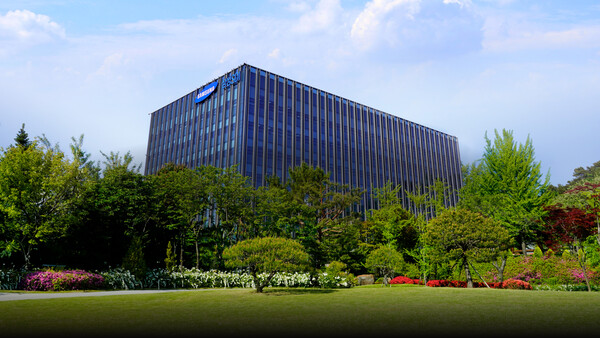
Samsung SDI returned to an operating profit in the second quarter, posting 203.8 billion won and regaining operating profitability for the first time in seven quarters. Samsung SDI said on Wednesday it posted second-quarter revenue of 3.77 trillion won and operating profit of 203.8 billion won. Revenue rose 18.5 percent from a year earlier and 5.4 percent from the previous quarter.
The operating result turned positive for the first time since the third quarter of 2024. It posted an operating loss of 397.8 billion won in the second quarter last year and an operating loss of 155.6 billion won in the first quarter this year, before returning to profit this quarter. Net profit in the second quarter was 471.6 billion won. That was up 740.5 percent from 56.1 billion won in the previous quarter and swung to profit from a net loss of 166.7 billion won in the second quarter last year. Net profit attributable to owners of the parent was tallied at 342.2 billion won.
First-half cumulative revenue was 7.35 trillion won and cumulative operating profit was 48.2 billion won. It returned to the black from an operating loss of 831.9 billion won in the first half last year. It achieved in the first half the performance turnaround it had set as its goal for this year, earlier than planned.
Battery segment revenue was 3.52 trillion won, up 18.8 percent from a year earlier, and it swung to profit with operating profit of 159.3 billion won. The revenue increase came from higher sales of high-output batteries used in UPS systems, BBU units and power tools, and expanded sales of electric-vehicle batteries for Europe.
Factors behind improved profitability included higher sales of high value-added products, AMPC benefits tied to increased U.S. local production, and the impact of tariff refunds, leading to a return to profit.
Electronic materials segment revenue was 249.8 billion won and operating profit was 44.5 billion won. Revenue rose 14.5 percent and operating profit increased 34.8 percent. Sales of semiconductor materials held steady, while film materials for foldable smartphones lifted both revenue and profitability.
Demand linked to AI data centres drove the first-half performance improvement. High-output products for power ESS, UPS and BBU were at the centre of the response.
In the ESS market, it secured an order-based foundation. It signed long-term supply contracts with major U.S. ESS customers by highlighting differentiated prismatic battery competitiveness and local production capabilities, and it also won orders in a next-generation domestic power distribution network ESS project.
In electric-vehicle batteries, its customer base widened. It won a new project from Mercedes-Benz, securing all three major German premium automakers as customers after BMW and Audi, and it also won an industry-first project for cylindrical batteries for hybrid electric vehicles. Higher sales of high-output batteries for power tools, together with the launch of prismatic electric-vehicle batteries with industry-leading energy density, also lifted utilisation rates.
It also worked in parallel to secure future growth engines. It expanded cooperation with major customers in the humanoid and aerospace sectors, where it expects high growth, and diversified its customer portfolio for new semiconductor packaging materials.
Samsung SDI forecast performance improvement would continue in the second half. In the United States, it is building a local supply chain and preparing mass production of prismatic LFP batteries, judging that demand for power ESS and UPS is growing sharply on the back of expanded renewable energy and increased AI data centre investment. In South Korea, it will increase participation in projects by using the comparative advantages of domestic SCM and production bases, and expand production capacity to meet UPS demand.
It is pushing development of UPS and power ESS products using sodium-ion batteries, with plans for mid- to long-term growth based on strengths in lifespan, output and safety, and it will flesh out mass production plans. For electric-vehicle batteries, it said U.S. demand is continuing to slow, while Europe is expected to see rising demand due to expanded subsidy policies in major countries and high oil prices. It will seek to expand supplies for mass-market models and win LFP battery projects.
For small batteries, it will expand production capacity for high-output cylindrical batteries to respond to rising demand in BBU and power tool markets and growth in new markets such as humanoids and aerospace. The electronic materials segment will increase sales of new semiconductor packaging materials and high value-added film materials for displays in line with favourable downstream conditions.
A Samsung SDI official said the company had expected a turnaround in the second half, but the timing of the return to profit was brought forward earlier than expected as revenue growth and profitability improvements continued quickly. The official said it would continue to push for sustainable growth in scale and secure profitability.
 Daegeon Seok
d2dg@d-today.co.kr
Daegeon Seok
d2dg@d-today.co.kr