
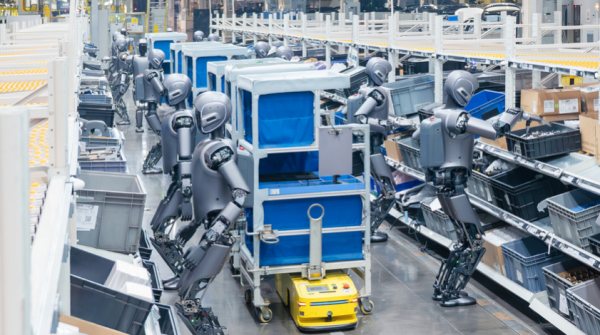
China has officially warned it could retaliate against tighter U.S. restrictions on imports of humanoid robots.
On July 30 local time, CNBC reported that China’s Ministry of Commerce demanded the withdrawal of the U.S. Federal Communications Commission’s recent measures, saying they seriously undermine the stability of U.S.-China economic and trade ties.
The FCC on July 29 added advanced robotic equipment produced overseas to a list restricting imports into the United States, citing cybersecurity concerns. The targets include humanoid robots. The FCC did not name specific countries, and said retailers can continue importing models that have already been approved.
China’s Ministry of Commerce said the United States continues to tighten restrictions on Chinese products, and that such measures seriously undermine the stability of economic and trade ties between China and the United States. It warned it would take response measures if the United States does not withdraw the decision. China also claimed it had shown restraint over product bans, but that the FCC repeatedly ignored this.
The move shows that the U.S.-China technology rivalry is expanding beyond artificial intelligence into robotics. U.S. President Donald Trump is set to hold talks in September with Chinese President Xi Jinping, but tensions between the two countries have not eased. U.S. Treasury Secretary Scott Bessent has mentioned possible sanctions, citing the “theft” of China’s AI models.
Markets have speculated the new rules could weigh on fundraising plans at Chinese humanoid companies. Mark Einstein, research director at Counterpoint Research, said it is bad news for Chinese humanoid companies seeking initial public offerings in the coming months. He cited additional restrictions on rare earth sales to U.S. companies and tighter limits on access to the China market for U.S. firms such as Tesla and Nvidia as possible options China could use.
Share prices also reacted. UBTECH, listed in Hong Kong, at one point fell more than 6 percent during intraday trade on July 30. Unitree and Agibot have applied to list. Counterpoint Research said the top three companies by market share based on humanoid installations last year were Agibot, Unitree and UBTECH. Tesla’s Optimus ranked fifth.
Robostore, which distributes Chinese-made humanoid robots in North America, is moving to expand its response capabilities in the United States. Chief executive Teddy Haggerty (테디 해거티) said the company has prepared by expanding its local U.S.-based capabilities. He did not disclose details.
Trump also suggested in public remarks the same day that the United States could take a more cautious approach to AI controls to maintain its technological edge over China. Against that backdrop, import restrictions and retaliatory pressure surrounding humanoid robots are emerging as a new variable in technology and trade frictions between the United States and China.
 Jinju Hong
hongjj@d-today.co.kr
Jinju Hong
hongjj@d-today.co.kr