
South Korea is pushing a plan to impose fines of up to 6 percent of related revenue, depending on the extent of violations, on businesses that send illegal spam or neglect obligations to prevent it.
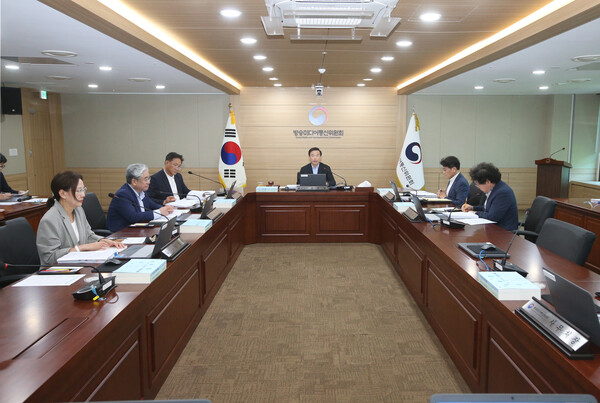
The Broadcasting and Media Communications Commission on July 29 reported at a full meeting that it had received a proposed revision to the Enforcement Decree of the Act on Promotion of Information and Communications Network Utilization and Information Protection, and a draft notice to establish standards for imposing fines for violations of rules on sending advertising information.
The proposed revision classifies the severity of illegal spam-related violations into 3 levels: very serious, serious and ordinary. It would impose fines of 1 to 6 percent of related revenue.
Severity will be determined comprehensively based on whether there was intent or negligence, the extent and type of violation, and the scale and impact of harm. If there is no revenue or it is objectively difficult to calculate, fixed fines of 100 million to 2 billion won will be imposed depending on the extent of the violation.
If a business that has received a fine in the past 3 years violates the rules again, the base amount will be increased by up to 50 percent. The base amount can also be additionally increased by up to 30 percent each for obstructing an investigation or destroying evidence, and for leading a violation involving multiple businesses.
If a business makes a voluntary report or cooperates with an investigation, or corrects a violation within the advance notice period, the amount can be reduced by up to 30 percent each. For small and medium-sized enterprises or non-profit corporations and organisations, the amount will be reduced by up to 50 percent of the base amount in consideration of business size.
The proposal also specifies the obligations of information and communications service providers to prevent illegal spam. If a company's service is used to send illegal spam, it must immediately stop sending advertising information and must refuse to provide the service or terminate the sender's service contract. It must also take steps to improve its terms of use and service contracts.
A "sender qualification certification" system will also be introduced for mass text message transmission businesses. If advertising information sent for profit is outsourced to an uncertified business, an administrative fine of up to 30 million won will be imposed depending on the number of violations.
Kim Jong-cheol (김종철), chairman of the Broadcasting and Media Communications Commission, said ahead of the meeting, "Since this is a system to protect the public from indiscriminate spam, please present appropriate opinions."
The proposed revisions to the enforcement decree and the notice are expected to be promulgated and take effect in October after a legislative notice period, review by the Ministry of Government Legislation, and approval by vice ministerial and cabinet meetings.
 Seulgi Son
sageson@d-today.co.kr
Seulgi Son
sageson@d-today.co.kr