
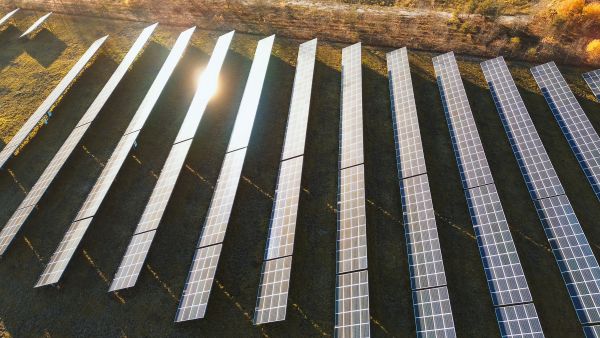
Tesla has agreed to buy 90 percent of the electricity output from a large solar and energy storage project under development in Arizona under a long-term deal. On the same day, it signed a contract to purchase all output from a separate solar power plant in Texas. The two agreements mean Tesla secured two large solar supply deals in a single day.
According to electric vehicle outlet Electrek on July 28 (local time), the Arizona deal covers Project Sterling, which combines 509 megawatts (MW) of solar with 360 MW of batteries. The project is being built by power developer ContourGlobal, owned by private equity firm KKR, and is scheduled to begin commercial operations in 2028. The two sides did not disclose the contract value, and ContourGlobal plans to retain and trade the remaining 10 percent.
Project Sterling pairs 509 MW of solar with a four-hour 360 MW battery. Converted to storage capacity, that is about 1,440 megawatt-hours (MWh). The battery is designed to supply solar power to the grid after sunset. The plant will be connected to the Western Area Power Administration grid, giving access to the California market. This is the first deal between Tesla and ContourGlobal, and ContourGlobal said it secured the project in late 2024 and described Project Sterling as the largest renewable energy asset in its portfolio.
Tesla on the same day also signed a power purchase agreement in Texas with Spanish developer Zelestra. The deal covers the 140 MW Lumen Farm solar plant under construction in northeast Texas, which Zelestra, partly owned by private equity firm EQT, is developing. Construction is scheduled for 2027 and commercial operations for 2029. The two sides did not disclose the price or how the power will be used, and Zelestra only confirmed that Tesla will take the plant's entire output.
The agreement is the companies' second. In 2024, they signed a 57 MW power purchase agreement bundling three solar plants in Spain's Castilla-La Mancha region, and this is their first contract in the United States. Phil North (필 노스), Zelestra's U.S. chief executive officer, said, "As a trusted global partner, we can provide tailored solutions to customers across regions," adding, "We are glad to expand our relationship with Tesla to the United States."
Zelestra has a renewable energy project portfolio of more than 16 gigawatts (GW) and was recently named among BloombergNEF's top 10 corporate clean energy sellers worldwide. In Texas, Meta is also a major customer. Over the past year, Zelestra has signed a series of solar power purchase agreements to supply electricity to Meta data centers, including the 180 MW Palmera project and the 176 MW Skull Creek plant. Based on these deals, it also secured $600 million in green financing for a 440 MW Texas portfolio. Ultimately, Tesla is buying power to meet rapidly growing electricity demand from the same developer, on the same grid (ERCOT), that supplies power to Meta data centers.
Combined, the two deals mean Tesla secured in one day more than 640 MW of solar generation from external operators and 360 MW of battery storage resources. The backdrop is growing electricity demand. The U.S. power market is facing greater supply-demand pressure as AI data centers expand, and Tesla also needs to supply electricity to Gigafactory Texas and its expanding AI computing infrastructure. The need to secure cheap, clean power over the long term is cited as the background to the deals.
What stands out is that Tesla purchased electricity from external operators for both projects even though it is a solar and battery manufacturer. Tesla produces the grid battery Megapack and already operates large-scale Megapack facilities in Arizona, and it also sells solar panels and Solar Roof. In Texas, it is also building a 100 GW solar panel factory. It was not disclosed what batteries will be used in Project Sterling.
This structure is not unrelated to Tesla's history in the solar business. Tesla acquired SolarCity, then the largest U.S. residential solar installer, for $2.6 billion in 2016, but later cut sales channels and effectively neglected the business. As a result, annual installations fell sharply from about 870 MW at SolarCity's peak, and for years Tesla's capabilities were focused on electric vehicles and the Megapack business. Only recently has Tesla moved to rebuild its solar business. It reintroduced solar leasing products in late 2025, launched U.S.-made solar panels in January this year, and is also building a large panel factory near Houston.
Ultimately, the two deals show that despite having its own panels and Megapack, Tesla is relying on external developers' generation assets to respond to actual power demand. In particular, by securing power in advance through 2028 and 2029 and beyond, the deals can be read as a medium- to long-term power procurement strategy tailored to factory operations and expanding artificial intelligence (AI) computing.
 Seung-ah Yoo
ysah@d-today.co.kr
Seung-ah Yoo
ysah@d-today.co.kr