
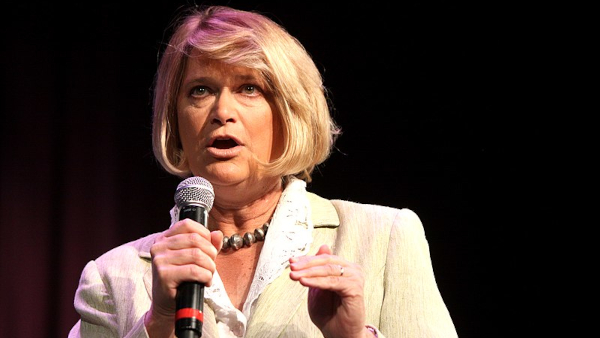
U.S. Republican Senator Cynthia Lummis (신시아 루미스) argued that provisions in the Clarity Act, a cryptocurrency market structure bill, aimed at tackling illicit funds could serve as a means to block cryptocurrency activity by North Korea’s hacking group Lazarus Group.
On July 28, CoinPost reported that Lummis said in a July 26 post on X, formerly Twitter, that groups such as Lazarus are deftly exploiting gaps in financial regulation. She presented sanctions and transaction-freeze provisions in the bill as key countermeasures.
The provisions Lummis highlighted are Sections 201, 303 and 305. Section 201 expands anti-money laundering obligations under the Bank Secrecy Act to cryptocurrency companies. Those covered include cryptocurrency exchanges, DeFi service operators and crypto ATM operators.
Section 303 grants the U.S. Treasury new sanctions authority in the cryptocurrency sector. It allows Treasury to designate foreign jurisdictions or financial institutions as primary money laundering concerns.
Section 305 allows exchanges and stablecoin issuers to hold transactions suspected of being linked to illegal activity for up to 30 days. It also applies a safe harbor that exempts companies from civil liability for actions taken in good faith. If there is an official request from law enforcement, the holding period can be extended up to 180 days.
Lummis explained that the Clarity Act expands Treasury’s sanctions authority and allows companies to freeze suspicious transactions before illicit funds move. She argued the provisions are among more than 16 illicit-finance countermeasures in the bill and could also help protect customer assets in the event an exchange goes bankrupt.
Behind the claim is continued large-scale cryptocurrency theft by North Korea-linked hacking groups. A report released in May by blockchain security firm CertiK estimated that North Korea-linked hacker groups stole about $6.75 billion through 263 attacks from 2016 to early 2026.
Of 656 cryptocurrency security incidents in 2025, North Korea-related cases totaled 79, or about 12 percent, but losses reached $2.06 billion. Considering that the remaining 577 cases resulted in losses of about $1.34 billion, the analysis said North Korea-linked groups focused on a small number of high-value targets.
A similar pattern has continued this year. Of total cryptocurrency losses of about $1.1 billion since the start of the year, more than $620 million, accounting for 55 percent, was analyzed as arising from North Korea-related cases.
Calls are also growing for international cooperation to respond to North Korea’s cryptocurrency theft. At a Group of Seven summit held in France in June, the need to jointly respond to North Korea’s cryptocurrency theft and cybercrime was reaffirmed. Lummis stressed that the Clarity Act could be a practical check on the threat from the Lazarus Group, which targets cryptocurrency at the state level.
Even so, the outlook for passing the bill is not bright. Lummis said she is concerned that if the Clarity Act does not pass in this session, the United States could miss the opportunity to establish comprehensive cryptocurrency regulation by 2030. Industry groups are also calling for a vote before the August recess, and cryptocurrency industry players including Grayscale and Goldman Sachs CEO David Solomon (데이비드 솔로몬) have expressed support for the bill.
Advancing to the full Senate is also not expected to be easy. Republicans are pushing to begin floor consideration, but securing the 60 votes needed to end debate is seen as the biggest hurdle. Senate Majority Leader John Thune (존 튠) said passage before the summer recess would be difficult, while expressing a desire to at least succeed in starting floor consideration.
Former U.S. government official Anne Kelly (앤 켈리) forecast that under Senate rules it would be difficult to finish deliberations before the Aug. 7 recess. Alex Thorn (알렉스 손) of Galaxy Research also lowered on July 24 the chance of the bill being enacted this year to 30 percent from 50 percent. The probability of passage within 2026 reflected on prediction market Polymarket was also at 33 to 37 percent, sharply lower than the 80 percent range in February.
The key issue in the discussion is whether the Clarity Act can function not only as a regulatory framework for the cryptocurrency industry but also as a means to block North Korea’s hacking funds and illicit fund flows. Whether the Senate can move into full-scale deliberations and whether the expanded sanctions authority and suspicious-transaction freeze provisions remain in the final draft will be points to watch going forward.
North Korea's Lazarus Group and other bad actors thrive on gaps in our financial rules. The Clarity Act gives Treasury new sanctions authority and a safe harbor for companies to freeze suspicious transactions before the money moves.
 Yoonseo Lee
yslee@d-today.co.kr
Yoonseo Lee
yslee@d-today.co.kr