
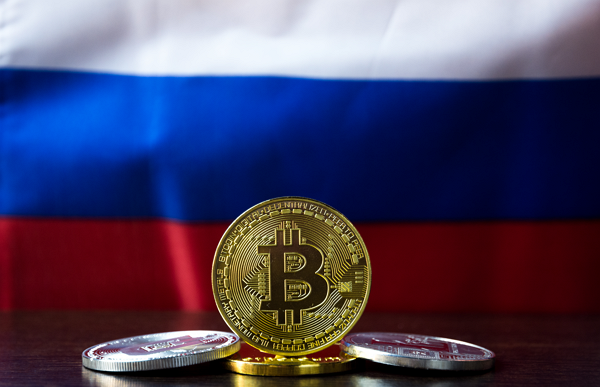
Russia's largest bank Sberbank plans to build cryptocurrency trading infrastructure by Dec. 1, local time.
Interfax, cited by blockchain outlet Cointelegraph, reported that Sberbank has begun preparations to bring cryptocurrencies into Russia's regulated financial system by setting up a trading, custody and settlement framework that includes a digital depository.
The centerpiece is a digital depository. The system is designed to record cryptocurrency ownership and process most transactions off the main blockchain. Sberbank also plans to directly operate active wallets so customers can instruct deposits, withdrawals and transfers.
Alexander Vedyakhin (알렉산드르 베댜힌), first deputy chairman of Sberbank's board, cited the digital depository as a key element of the new infrastructure. He said the digital depository would record customers' cryptocurrency rights and account for off-chain transactions outside the main blockchain. He also said it would support active wallet transactions to execute customers' currency transfer orders.
The plan coincides with a point at which Russia is fleshing out a legal framework to bring the broader cryptocurrency market into the institutional system. Russia's parliament earlier this month заверш completed final deliberations on a bill regulating digital asset activities, taking a step closer to introducing its first comprehensive regulatory framework for the cryptocurrency market.
If the bill takes effect, the Bank of Russia will broadly oversee the regulated market. The central bank will have the authority to decide which cryptocurrencies can be offered through licensed intermediaries and will also draw up detailed implementing rules. Liquidity criteria were also set. Only cryptocurrencies that meet both an average market capitalisation of at least 5 trillion roubles and average daily trading volume of at least 1 trillion roubles for 2 years can be included in the regulated market.
Market participants will also be more clearly classified. The new framework sets 5 categories of regulated participants, including cryptocurrency exchanges, brokers, asset managers, custodians and currency exchange service providers. Once it takes effect from Sept. 1, 2026, it will also institutionally define who can buy, sell, hold and exchange cryptocurrencies.
An external sanctions environment also underlies Russia's rush to build infrastructure. Russia has left open a path to use cryptocurrencies for foreign trade, while the European Union is tightening sanctions on Russia over the war in Ukraine. The EU recently added cryptocurrency exchange HTX to its sanctions list.
The European Council said it amended existing measures in view of Russia's actions destabilising the situation in Ukraine. It also designated HTX as 1 of 18 offshore cryptocurrency or payment service providers that significantly undermine the purpose of Russia-related restrictive measures. The British government in May also imposed similar sanctions, saying there were reasonable grounds to believe HTX supported the Russian government through financial services and funds facilitated by sanctioned entities.
In addition, EU authorities announced they would ban Belarusian nationals and residents from owning, controlling or operating cryptocurrency exchanges and digital asset service providers under the EU's Markets in Crypto-Assets, or MiCA, framework. Russia is accelerating efforts to build domestic trading, custody and payment infrastructure within the regulated financial system even as sanctions are tightened.
 Yoonseo Lee
yslee@d-today.co.kr
Yoonseo Lee
yslee@d-today.co.kr