
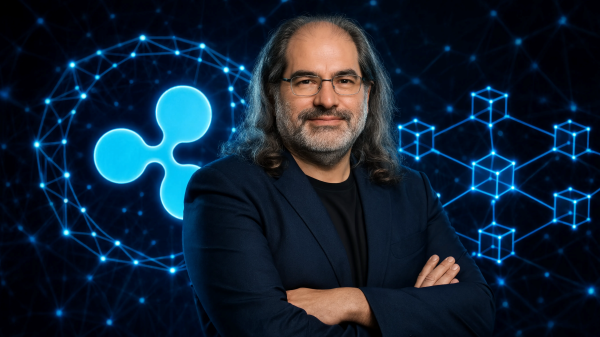
David Schwartz, a former chief technology officer at Ripple and a core developer of the XRP Ledger (XRPL), has named Nick Bougalis as the only reason he would reverse his retirement.
On July 23 (local time), blockchain outlet U.Today reported that Schwartz said his condition for returning depends on a specific person, not money or the scale of work.
The key point is that Schwartz set the bar for a return not in compensation or a title, but in an engineer he worked with in the past. Schwartz retired on Jan. 1, 2026 and is now providing selective advice as Ripple’s honorary CTO. He chose a quieter life after writing code for 13 years, but remains involved in supporting releases such as the XRPL 3.2.0 update carried out in June.
Nick Bougalis, whom Schwartz mentioned by name, is a key figure in the early development of XRPL. Bougalis joined Ripple as its eighth employee and led the core engineering team for about 10 years while building the XRPL core code. He is also cited as a contributor on 3 patents in advanced cryptography. Those patents have become part of the technical foundation of today’s distributed networks.
Even so, a reunion between the two is unlikely. Bougalis left Ripple in 2022 and took charge of technology as CTO of the Algorand Foundation in late 2025. Schwartz also remains connected to the Ripple ecosystem and XRPL. As they belong to different, competing blockchain ecosystems, the chances of them working together again on actual code are limited.
Schwartz has continued to make tongue-in-cheek remarks after retiring. When XRP surged 20 percent in January, he also joked that it was "because I retired." This time, however, it differs in that he set out a very specific condition for returning.
The point of note is the symbolism of the two figures who led XRPL’s early development, rather than whether Schwartz will actually return. One continues to support XRPL updates even after retirement, while the other has moved to the role of CTO at the Algorand Foundation. This remark is therefore interpreted not as a signal of cooperation between Ripple and Algorand, but as recognition of a fellow developer that is rare in the cryptocurrency industry.
The remark has again highlighted the relationship between key figures who led the early development of XRPL, more than the possibility of Schwartz returning. It shows that technical contributions and peer evaluations still carry meaning in the industry even after they split into competing blockchain ecosystems.
The one thing that could almost make me think seriously about unretiring would be getting to work with @nbougalis again.
 Yoonseo Lee
yslee@d-today.co.kr
Yoonseo Lee
yslee@d-today.co.kr