
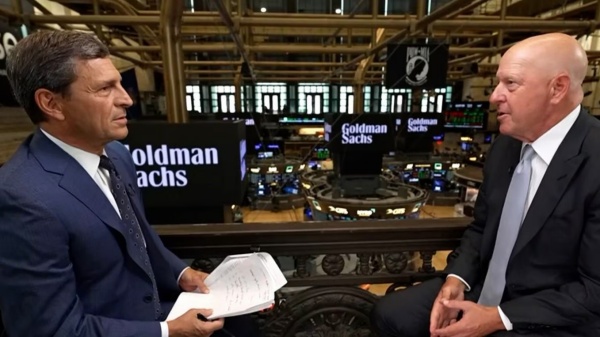
[DigitalToday reporter Yoonseo Lee] David Solomon, CEO of Goldman Sachs, has formally expressed support for the U.S. Clarity Act.
On July 24 (local time), blockchain outlet CoinPost reported that he backed the bill in an interview held shortly after Republican senators circulated revised bill language ahead of a Senate floor vote.
Solomon stressed that while the bill is not perfect, its direction toward putting market order in place is clear. "The most important point is to create a fair competitive environment and promote the market's stability and development," he said. "I want to drive innovation by putting the market structure in order," he added.
The Clarity Act seeks to overhaul the digital asset regulatory framework by clearly dividing jurisdiction between the U.S. Securities and Exchange Commission and the Commodity Futures Trading Commission. Goldman Sachs, which has a strong investment-banking character, was reported to have focused on provisions that allow existing financial institutions to use digital assets and blockchain technology. Solomon also said of the company's position, "We need a single system that anyone can participate in," adding, "This bill is an important milestone for that."
That stance contrasts with the financial sector. Six major banking and finance groups, including the American Bankers Association, submitted a joint statement on July 23 warning that the bill's stablecoin-related provisions could risk undermining local lending that supports U.S. economic activity. They said that if bank deposits covered by the Federal Deposit Insurance Corp move to digital asset platforms, community banks' capacity to lend could shrink.
Opposition is also spreading beyond banks. The United States Hispanic Chamber of Commerce stated its opposition to the Clarity Act in a letter sent to Senate leadership on July 21. The group said the bill could accelerate deposit shifts from banks to digital asset platforms and weaken community banks' ability to supply funds. It also said the Community Reinvestment Act, which obliges reinvestment in local communities, does not apply to digital asset platforms, and called for amendments to prevent widening gaps.
Political disputes also remain. Some law enforcement groups also oppose the bill, and discussions are continuing over an ethics provision that would ban a president from issuing cryptocurrency. The latest draft previously made public included the ban, but it was designed to take effect in January 2029.
Democrats say the revised bill unveiled by Republicans on July 23 did not sufficiently reflect their demands. That increases the likelihood of further negotiations continuing until the Senate floor vote.
The debate shows how interests diverge between investment banks and commercial banks in the process of overhauling the cryptocurrency regulatory framework. It also highlighted that even within the financial sector, the bill's benefits and burdens may vary depending on how digital assets are used.
 Yoonseo Lee
yslee@d-today.co.kr
Yoonseo Lee
yslee@d-today.co.kr