
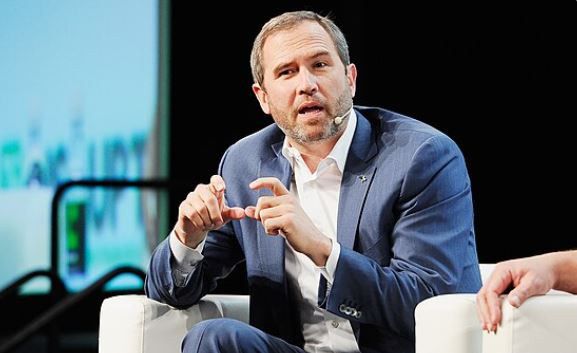
Ripple Chief Executive Brad Garlinghouse (브래드 갈링하우스) again urged the U.S. Congress to pass the digital asset market Clarity Act. He said lawmakers should not delay the bill any further even if there are political disagreements.
On July 23, blockchain outlet U.Today reported that Garlinghouse echoed remarks by Ripple Chief Legal Officer Stuart Alderoty (스튜어트 알데로티) and stressed the need to push the bill forward. In a post on X, formerly Twitter, he wrote, "Perfection must not be the enemy of good enough. Let’s get this done." He argued that debate over further improving the bill should not block the core legislation itself.
The Clarity Act was introduced as a measure that would set clearer rules for the digital asset industry while strengthening the authority of enforcement agencies. Alderoty defined it as a consumer protection bill. He said, "The Clarity Act is a consumer protection bill with strong anti-money laundering and know-your-customer requirements, and practical tools for law enforcement and state attorneys general," adding, "If we leave the bill on the table, consumers are left in unclear standards and bad actors can exploit the gap again."
Despite those industry demands, prospects for the bill’s passage in the Senate have recently become more uncertain. Some Democratic senators, including Maryland’s Angela Alsobrooks, New Jersey’s Cory Booker, Nevada’s Catherine Cortez Masto and Arizona’s Ruben Gallego, oppose the latest draft. As a result, the likelihood the bill will be signed into law this year has fallen below 40 percent, and the path to passage has narrowed sharply, the report said.
The argument has also continued that debate over restructuring market structure should not be blocked by issues outside the bill’s original purpose. Joshua Riezman (조슈아 리즈먼) of GSR criticised some Senate Democrats, saying they were making the wrong judgment in both policy and politics. He warned, "If the bill is derailed, it does not produce a better outcome. It keeps regulatory confusion, pushes innovation overseas and wastes years of bipartisan work."
Coinbase also called for a Senate floor vote and took the same position. Coinbase CEO Brian Armstrong (브라이언 암스트롱) argued that the Clarity Act is already ready to be brought to a full Senate vote. He described the bill as a compromise crafted by both parties over thousands of hours.
Armstrong said the current U.S. regulatory environment is not properly protecting consumers. He said, "The status quo in the U.S. does not work," adding, "Without a federal framework, bad actors like FTX were able to harm U.S. customers, and much of the industry moved overseas outside U.S. oversight." He also said, "Crypto cannot be made to go away now, so regardless of whether you support it or oppose it, clear federal law is needed."
The debate shows legislation over structural rules for the U.S. crypto market remains heavily influenced by political factors. The industry argues the Clarity Act is the minimum framework needed to protect consumers and secure market competitiveness, but continued opposition in the Senate is expected to bring significant difficulties before any legislation is enacted.
 Jinju Hong
hongjj@d-today.co.kr
Jinju Hong
hongjj@d-today.co.kr