
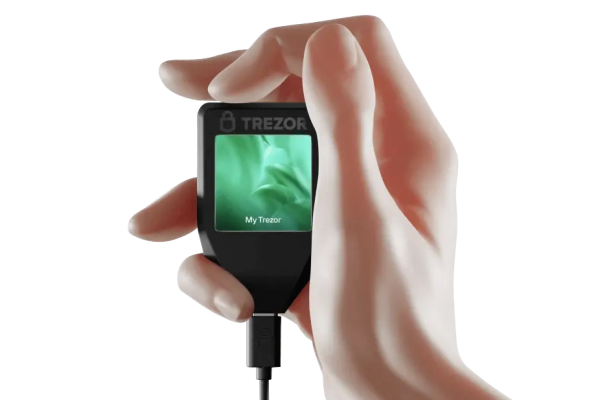
Danny Sanders (대니 샌더스), chief commercial officer at Trezor, pushed back against blockchain investigator JackXBT’s recent criticism of hardware wallets. According to a recent report by The Block, JackXBT wrote in a Telegram post earlier this week, “All hardware wallets are complete trash, and I recommend not using them for important tasks like signing transactions or storing funds.” He recommended using a separate iPhone dedicated to storing funds and signing transactions instead.
Sanders, in an interview with The Block’s Geras Jenkinson on The Starting Block on July 17, local time,
He said he understood complaints that software and firmware updates can be urgent or interfere with high-value transactions, but said JackXBT had generalised from cases involving experienced users handling large sums.
“People who need to manage large funds in high-risk environments need a different configuration, and a single hardware wallet is not the best solution,” Sanders said. “That doesn’t mean you can say everything is trash.”
An iPhone may be useful in some cases, but its operating system and connectivity functions create more “attack vectors” than a hardware wallet, he said. “An iPhone has Wi-Fi, Bluetooth, iMessage and cellular. Even generating keys on an iPhone is riskier than on a hardware wallet,” he said. “Hardware wallets also have a separate screen that lets you verify transaction details before signing. For ordinary cryptocurrency holders, it is currently the strongest form of self-custody.”
Roman Storm, a co-founder of Tornado Cash, took a position closer to JackXBT’s. Storm said the real problem was the lack of a mobile wallet that supports a BIP39 passphrase. The feature adds a word or phrase to a seed phrase, protecting funds even if a paper backup is discovered.
“JackXBT is right. It’s just that there’s no tool to actually do that on mobile,” Storm said. “Mobile wallet developers should add BIP39 passphrase support and an air-gapped signing feature that can sign transactions without a network connection,” he said.
 Chi-gyu Hwang
delight@d-today.co.kr
Chi-gyu Hwang
delight@d-today.co.kr