
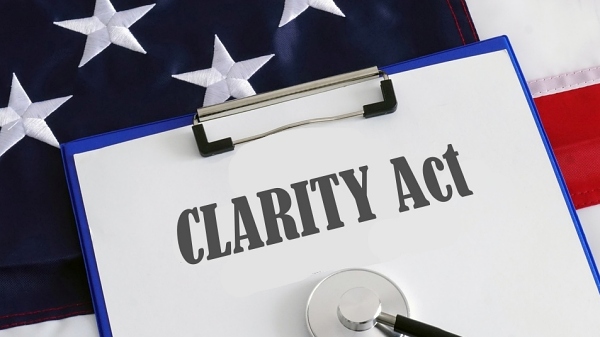
Michael Selig (마이클 셀리그), a commissioner at the U.S. Commodity Futures Trading Commission (CFTC), urged Congress to swiftly pass the CLARITY Act, a crypto market structure bill. He warned that if legislation is delayed further, regulators could end up setting rules individually without Congress establishing a comprehensive regulatory framework.
CoinPost, a blockchain media outlet, reported on July 10 that Selig stressed in an interview with Fox Business that passing the CLARITY Act was “an urgent task for Congress.”
He said crypto-related laws and regulations in the United States are scattered by state, creating burdens for companies. With the bill in its final stage, he said a bipartisan agreement must be completed to ensure legal certainty, regulatory clarity and consumer protection.
Selig also pointed to the risk that regulatory discretion could become excessive if legislation is delayed. “If Congress fails to legislate, regulators like me will make all the rules,” he said. “Democrats would also prefer passing a bipartisan bill rather than leaving every decision to regulators,” he added.
In the Senate, last-minute coordination continues over detailed provisions. Selig cited as a major stumbling block Democrats’ push to add ethics rules related to cryptocurrency businesses tied to U.S. President Donald Trump’s family. He said he was concerned such discussions could lead to “mission creep” beyond the bill’s original purpose and undermine opportunities for bipartisan legislation.
Senator Cynthia Lummis (신시아 루미스), who leads the Senate Banking Committee’s digital assets subcommittee, also said negotiations had effectively entered the final stage.
Lummis said talks have continued for thousands of hours since September last year, and the biggest issue was discussions over amendments to the GENIUS Act sought by the banking sector. He added that consultations with stakeholders had produced a compromise on much of the package.
Senate discussions are not over, though. Negotiations continue over DeFi regulation, responses to illicit finance and ethics rules, and the bill has reportedly entered a stage where the text is being released for final review by lawmakers and stakeholders. Lummis forecast that deliberations could make progress within July.
The CLARITY Act passed the House on a bipartisan basis in July last year and is now under Senate review. This year, limits on stablecoin returns, DeFi regulation, responses to illicit funds and Section 604, a developer protection provision, have emerged as key issues. In May, the bill was approved in committee following revisions led by Senate Banking Committee Chairman Tim Scott, passing 15 to 9.
In particular, the Blockchain Regulatory Certainty Act (BRCA) included in Section 604 clarifies that non-custodial blockchain developers and validators are not classified as money transmitters under the Bank Secrecy Act (BSA). The cryptocurrency industry assesses the provision as offering legal certainty for developers and a safeguard to prevent innovation in the United States from flowing overseas.
Some law enforcement groups, however, have raised concerns that the provision could make it harder to track money laundering or funds that violate sanctions. The National Black Law Enforcement Executives Association supported the overall bill including the BRCA, while the Major County Sheriffs of America (MCSA) shifted earlier this month from opposing the provision to taking a neutral stance.
In the Senate, calls continue to keep the developer protection provision. Democratic Senator Ron Wyden (론 와이든) urged Senate leadership in a letter sent on July 7 to retain the BRCA.
Wyden said the provision would codify existing positions of the Justice Department and the Financial Crimes Enforcement Network (FinCEN). He said it would help focus investigative capacity on actual illegal actors such as unlicensed money transmitters.
The bill’s final fate will depend on the outcome of bipartisan negotiations that continue until a Senate floor vote. If compromises are reached on ethics rules, DeFi regulation, responses to illicit finance and developer protections, the regulatory system for the U.S. cryptocurrency market is expected to take root more fully within the institutional framework.
 Jinju Hong
hongjj@d-today.co.kr
Jinju Hong
hongjj@d-today.co.kr