
South Korea's Financial Services Commission reviewed the performance of its joint response team to eradicate stock price manipulation on the first anniversary of its launch. Over the past year, it detected and acted on more than 10 major unfair trading cases and is pushing to strengthen investigative powers and build an artificial intelligence (AI)-based market surveillance system.
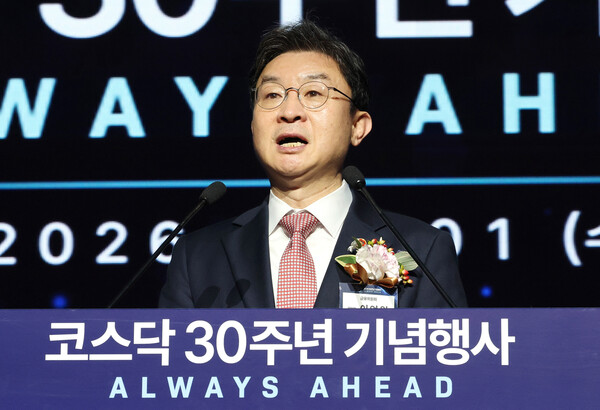
The FSC said on Tuesday it held a meeting at the Korea Exchange, chaired by FSC Chairman Lee Eok-won (이억원), to review one year of operating results for the joint response team.
The team was launched on July 30 last year with 36 members. It was later expanded to a two-team structure in January this year and, after staffing reinforcement in the first half, grew to 90 members. Financial authorities plan to increase staffing to 100 members in the future.
According to the FSC, the team detected and investigated more than 10 cases over the past year, including long-term price manipulation by super-rich investors, insider trading by a senior brokerage executive and the use of undisclosed information by a listed company's disclosure officer.
Some of the cases were reported or referred to prosecutors, and two were hit with penalty surcharges in advance. The measures aim to quickly recover illicit gains obtained through unfair trading.
Major cases include one in which operators of large private academies and hospital directors used large sums of money and borrowed-name accounts to manipulate the stock prices of listed firms over a long period, and another in which a senior brokerage executive used undisclosed information related to a tender offer to obtain illicit gains.
The authorities are also investigating suspected front-running in which reporters at media outlets allegedly bought certain stocks in advance before publishing favourable articles and then sold them when prices rose.
The FSC assessed that operating the joint response team has raised market vigilance. Brokerages, media outlets and others are also showing signs of strengthening internal controls, including bans on stock purchases, expanded monitoring scopes and the establishment of ethics guidelines.
The response system will also be strengthened going forward. The FSC is pushing to create authority to request confirmation data on telecommunications facts to prevent evidence destruction and identify information transmission routes.
It also plans to broaden the scope of cases subject to the application of confiscation and additional collection rules. It plans to propose in the third quarter an amendment to the Capital Markets Act to expand the scope, which is currently centred on price manipulation, to cover the use of undisclosed information and fraudulent trading.
AI-based market surveillance will be upgraded. The exchange will build a system to use AI to detect criminal acts that use YouTube and social media and analyse them in combination with trading patterns. It is also pushing to introduce an AI agent for case analysis.
The FSC will also review the use of administrative measures such as extending the suspension period for accounts linked to unfair trading, restricting transactions in financial investment products and restricting the appointment of executives. The aim is to quickly remove malicious and habitual offenders from capital markets.
Lee said the joint response team has, over the past year, played a role on the front line of securing trust in capital markets by quickly detecting illegal acts and imposing strict sanctions. He said the FSC will strengthen an all-round response system of rapid detection, strict investigations and zero-tolerance sanctions by reinforcing investigative and sanctioning powers, expanding an AI-based smart market surveillance system and strengthening system links with relevant agencies.
 Sangyeop Oh
yub@d-today.co.kr
Sangyeop Oh
yub@d-today.co.kr