
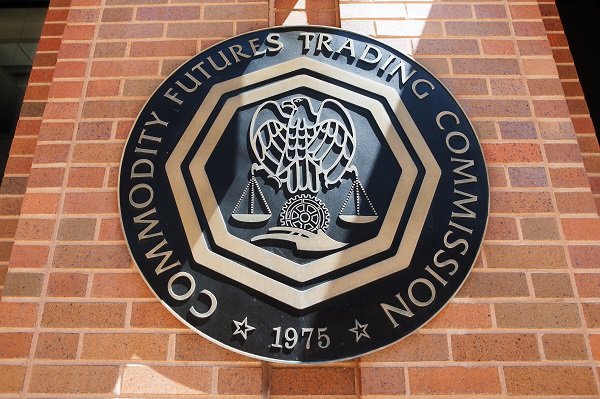
Prolonged vacancies at the U.S. Commodity Futures Trading Commission (CFTC) are also disrupting progress on the CLARITY bill, which would set the structure of the cryptocurrency market. The industry is increasingly concerned that if the United States fails to move quickly on legislation, other countries could take the lead in setting global digital asset rules.
According to blockchain outlet Cryptopolitan on July 10 local time, the CLARITY bill includes provisions to grant the CFTC authority to oversee digital commodity spot markets. But the CFTC now has only 1 commissioner, Republican Michael Selig (마이클 셀리그), out of its 5 seats, raising concerns about its oversight capacity.
That day, the White House and Senate Democrats clashed head-on over responsibility for the CFTC vacancies. In a letter to Senate Republican Leader John Thune and Senate Democratic Leader Chuck Schumer, the White House claimed Democrats were blocking the Trump administration's private-sector nominees. It also countered that the administration had asked Democrats to recommend candidates for the SEC and CFTC seats allocated to Democrats, but had received no reply.
Democrats, however, have criticised the Trump administration for intentionally delaying appointments to independent regulatory agencies, including the SEC and CFTC.
Selig recently said in a Fox Business interview, "If Congress doesn't act, regulators may end up writing all the crypto rules." He meant that if legislation is delayed, the market standard could be set by regulators' interpretations rather than laws passed by Congress.
Appointments have also remained an issue. According to the White House, the Trump administration withdrew Brian Quintenz's nomination as CFTC chair in September last year, and nominated Selig as a new candidate in October of the same year. A recent Supreme Court ruling broadly recognising President Trump's authority to dismiss heads of independent agencies also affected the controversy. The White House argued that, based on the ruling, Democrats' criticism was less persuasive.
The market is concerned that the vacancies are more than a political dispute and could undermine regulatory stability itself. The CFTC has about 543 staff, far smaller than the Securities and Exchange Commission (SEC), which has about 4,200. It has also been reported that total staffing has recently fallen by about 21 percent. Questions are also being raised about whether a system in which the global cryptocurrency market, which operates 24 hours a day, is effectively overseen by a single commissioner is sustainable.
House Agriculture Committee leaders Glenn Thompson and Angie Craig said in a letter to President Trump in May that rules made by a single commissioner could be vulnerable to legal disputes. They said rules made under a five-member structure were much more likely to endure, and stressed that global companies place importance on regulatory stability and predictability when choosing where to do business.
In the Senate, a sense of urgency is also growing over the legislative deadline. Senator Cynthia Lummis said on X, formerly Twitter, this week, "This session could be the last chance to pass substantive digital asset legislation before 2030." She warned, "If we can't get this done now, other countries will make the digital asset rules and the U.S. will be following them for the next 10 years."
Several issues still remain before the CLARITY bill can pass. The Senate is likely to reconvene on July 14 and continue the legislative process, but some provisions are seen as last-minute variables. Key issues include a provision protecting non-custodial blockchain developers, Section 604 excluding developers and some service providers from money transmitter regulation, and whether to allow exchanges such as Coinbase to offer rewards for holding stablecoins. Section 604 in particular has been criticised as potentially weakening anti-money laundering frameworks.
The stablecoin rewards provision is also entangled with the interests of the financial sector. Standard Chartered forecast that stablecoins' interest-paying function could draw in $1 trillion of traditional bank deposits by 2028. This concern is seen as the reason the American Bankers Association has opposed a related compromise proposal.
Market reaction was limited. The total cryptocurrency market capitalisation rose about 1 percent on the day to near $2.2 trillion, and bitcoin traded around $63,773, influenced by stable oil prices. The industry sees how the Senate handles the CLARITY bill after July 14 and whether President Trump actually fills the CFTC vacancies as key variables that will determine the direction of the U.S. cryptocurrency regulatory framework.
 Jinju Hong
hongjj@d-today.co.kr
Jinju Hong
hongjj@d-today.co.kr