
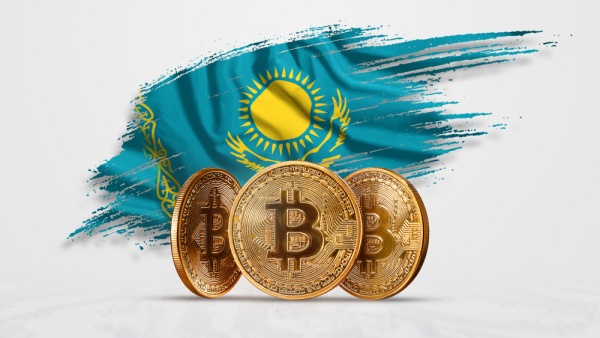
Kazakhstan has issued a new decree that includes cross-border payments using stablecoins and tax benefits for retail investors.
Cryptopolitan, a blockchain media outlet, reported on Tuesday that President Kassym-Jomart Tokayev (카심-조마르트 토카예프) signed the decree to expand cryptocurrency regulation and adoption.
The decree focuses on bringing digital assets into the formal system. The Kazakh government is seeking to establish a structure that allows digital assets and stablecoins to be used to settle import and export payments. Companies will be able to use the new payment method alongside the existing banking network. The government plans to widen channels for sending and receiving payments in overseas transactions.
It is also seeking to encourage the transfer of cryptocurrency funds held abroad back into the country. Traders who keep assets at currently unregulated overseas exchanges or wallets will be able to voluntarily report their holdings and then move them to domestically approved service providers. Kazakhstan plans to absorb such transfers into regulated transactions and make them beneficial to the economy.
Tax benefits are also under review. The Kazakh government is pursuing a plan to exempt personal income tax on profits from digital asset transactions carried out through its domestic regulatory infrastructure. Kursiv reported that the Ministry of AI and Digital Development (MAIDD) said, "Income from digital asset transactions conducted through Kazakhstan's regulated infrastructure will be exempt from personal income tax." The move is intended as an incentive to shift funds held at overseas exchanges and wallets into the domestic regulated market.
The decree also covered the mining industry and power policy. It allows associated gas and natural gas from oil fields not needed for state use to be used for self-generation, with the electricity produced supplied to mining operations. The measure broadens miners' options for securing power. It is also linked to Kazakhstan's "70/30" energy model, which lets data centres and mining companies use up to 70 percent of new generation capacity created through infrastructure upgrades.
MAIDD, the National Bank of Kazakhstan and the Astana International Financial Centre took part in designing the policy. Kazakhstan views the decree as a legal preliminary step toward a regulated digital asset market. The aim is to attract external capital and present clearer operating rules for cryptocurrency companies.
The government also set out the direction of the system design. Zhirat Baitursinov (기자트 바이투르시노프), MAIDD vice minister, said the goal is to create a "clear and predictable environment" for everyone from miners to financial institutions. He also said safeguards and regulations for Kazakh citizens would be ensured as well.
The decree goes beyond payments and mining. In capital markets, it called for tokenised financial products and the development of national-level trading infrastructure, and it included the possibility of issuing tokenised government bonds. Kazakhstan's digital asset policy is thus expanding beyond industrial development into building a regulatory framework spanning payments, trading, electricity and capital markets.
 Yoonseo Lee
yslee@d-today.co.kr
Yoonseo Lee
yslee@d-today.co.kr