
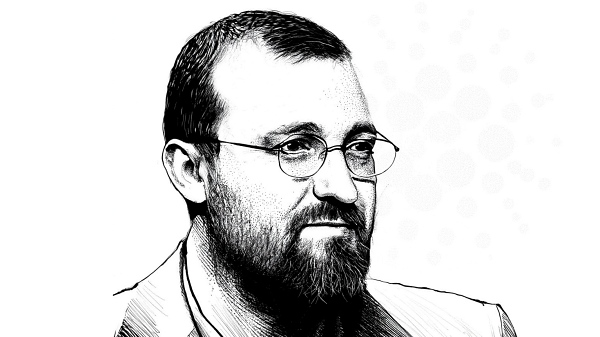
Charles Hoskinson (찰스 호스킨슨) directly criticised Ethereum's staking structure and argued Cardano is a better alternative.
On July 8, blockchain outlet The Crypto Basic reported that Hoskinson, CEO of Input Output Global (IOG) and founder of Cardano, said Ethereum's proof-of-stake (PoS) structure forces unnecessary complexity on users.
He singled out Ethereum staking for requiring fund lockups, exposing users to slashing risk, imposing bonding periods and relying on liquid staking derivative structures. "It forces unnecessary fund freezes on users, makes them take on risk, and requires a mandatory period of obligation for liquid staking solutions built on derivative assets such as Lido," he said.
The core of the criticism is how users can manage their funds. To run a validator node on Ethereum, users must stake 32 ether. The network applies slashing to deter malicious behaviour and also has a withdrawal queue. This structure makes it difficult to immediately recover staked assets, and liquid staking services have filled the gap.
Services such as Lido issue derivative tokens that represent staked ether, allowing users to continue using their assets in decentralised finance (DeFi). Hoskinson said this structure itself shows the complexity of Ethereum's staking design.
By contrast, he explained that Cardano basically adopts a structure closer to liquid staking. ADA holders can receive staking rewards through delegation without locking up assets, while keeping control of their tokens throughout the process.
Cardano users can freely send or move ADA while staking and continue to receive rewards under the Ouroboros consensus protocol. Hoskinson argued this design reduces unnecessary complexity and improves accessibility for ordinary users.
His remarks follow his recent criticism of the Ethereum Foundation. He previously criticised the foundation's one-off object-based proposal, saying it repeated the extended UTXO (EUTXO) model that Cardano has adopted since its early release. The proposal aims to reduce Ethereum state bloat by up to 99.8 percent while maintaining an account-based structure, and Hoskinson said Ethereum accepted a "concept pioneered by Cardano 10 years ago" without proper recognition.
He also said Ethereum may further adopt Cardano's designs going forward. He cited on-chain governance, the Ouroboros consensus protocol and a treasury system as elements Ethereum could consider in the future.
Ethereum and Cardano are both proof-of-stake blockchains, but their staking implementations differ significantly. Citing those differences, Hoskinson again stressed that Cardano has a more efficient and more accessible structure, and he expects design competition between the two camps to continue.
It's not like I've been literally working on this topic for over 10 years of my life and launched a cryptocurrency that was number three on coinmarketcap with millions of users to deploy it. It's literally a crime in the Ethereum inner circles to mention Cardano. EUTXO is the… https://t.co/3F3l6cg0JE
 Yoonseo Lee
yslee@d-today.co.kr
Yoonseo Lee
yslee@d-today.co.kr