
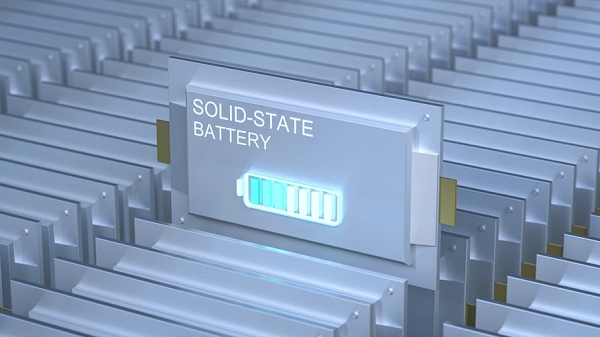
A study has found that the core cause of short circuits in all-solid-state batteries lies in grain boundaries inside solid electrolytes.
InsideEVs, an electric-vehicle outlet, reported on July 7 that researchers from the Massachusetts Institute of Technology (MIT) and the Technical University of Munich identified a main cause of lithium-metal dendrite growth and also presented a process solution to reduce it.
All-solid-state batteries use solid electrolytes instead of liquid ones, making it possible to extend driving range, shorten charging time and reduce fire risk. They have been seen as next-generation batteries for electric vehicles. But cases applied to mass-produced electric vehicles remain rare. One reason commercialization has been slow is microscopic lithium-metal protrusions, or dendrites, that grow inside batteries. These protrusions can cause internal damage and eventually lead to short circuits.
The researchers pointed to interfaces between fine crystals that make up a solid electrolyte, or grain boundaries, as the center of the problem. Solid electrolytes form as many fine particles interlock. If an electrical imbalance hidden at boundaries between particles emerges, lithium-ion movement is blocked and electrons concentrate in that area. The imbalance promotes dendrite formation, the study said.
Harry Tuller (해리 털러), a professor of materials science at MIT, said in a blog post, "Grain boundaries are like the weather. Everyone talks about them but no one touches them." He added that the research decided to respond directly to the grain-boundary issue.
The researchers used AI and specialized analysis methods on a lithium lanthanum zirconate solid electrolyte to track current flow in grain-boundary regions. They then adjusted electrolyte processing to reduce damage. As a result, lithium ions moved more freely without forming dendrites. The process also reduced energy loss.
The results were also confirmed in numbers. The researchers said current density rose by more than 300 percent compared with a reference sample. That suggests the potential to boost charging and discharging speed compared with existing all-solid-state designs and to extend battery service life.
The results are still at the laboratory stage. Automakers and battery companies are developing defect-removal technologies in their own ways to make all-solid-state batteries suited for mass production of electric vehicles. Dendrites are not the only obstacle to wider adoption. Cutting costs and suppressing defects in mass production remain major challenges.
The research shows that bottlenecks to commercialization of all-solid-state batteries may lie in microstructure and process conditions rather than the materials themselves. It is also assessed as a case that presented new design standards for battery companies to suppress dendrites. The key issue going forward is whether such laboratory-level process improvements can be reproduced in actual mass-production environments.
 Seung-a Yoo
ysah@d-today.co.kr
Seung-a Yoo
ysah@d-today.co.kr