
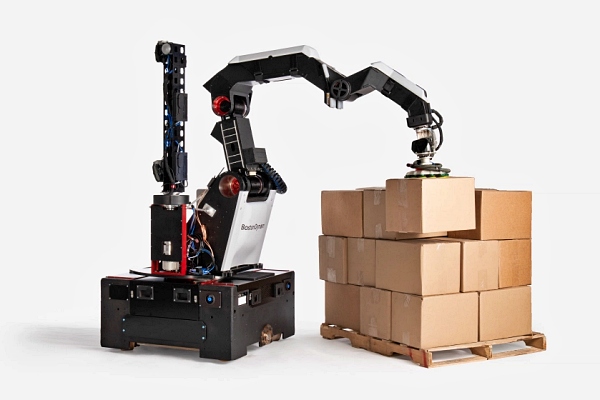
Although enthusiasm for humanoid robots is spreading, skepticism about human-shaped designs is also growing among major Silicon Valley investors.
Business Insider reported on July 7 that some venture investors see humanoids as broadly applicable but say other robot forms designed for specific tasks are more efficient in industrial settings.
The key question is whether robots must also be humanoid just because the world is designed around humans. Ajay Agarwal (아제이 아가왈), a partner at Bain Capital Ventures, said humanoids could lean more toward demonstration impact than practicality, and some may amount to "showy stunts". He also pointed to a structure that must support a heavy upper-body battery on legs, which he said increases power consumption and raises the risk of falling.
Agarwal also raised concerns about mobility efficiency. "There is a reason humans fly planes and drive cars," he said. "Wheels and wings are more efficient than walking." Some investors are therefore shifting money from humanoids to wheeled general-purpose robots or industrial automation robots.
Investment flows are also diverging. Khosla Ventures and former Google chief executive Eric Schmidt (에릭 슈밋) invested last month in GenesisAI, which unveiled a wheeled general-purpose robot without a head or legs. Bain Capital Ventures and Conviction, led by Sarah Guo (새라 구오), backed Sundai Robotics, which is developing a wheeled home robot. Green Oaks, a global internet and technology-focused investment firm founded by Neil Mehta (닐 메타), funded The Bot Company, set up by former Cruise CEO Kyle Vogt (카일 보그트).
Eclipse, which has focused on industrial-site investing, is also drawing a line on humanoids. Jiten Behl (지텐 벨), an Eclipse partner and a former Rivian employee, said most tasks at manufacturing sites do not require walking or an upright posture. "A smarter attempt is not to fit into the average form of a humanoid, but to choose a form factor suited to the use case," he said.
Investor Ghazwa Khalatbari (가즈와 칼라트바리) reached a similar conclusion. After watching a humanoid demonstration video, he said, "This robot was putting dishes into a dishwasher more slowly than my grandmother." Khalatbari took part in research criticising the so-called "humanoid fallacy" that robots must resemble humans to work in human spaces, and argued with Lux's Deena Shakir (디나 샤키르) that robot bodies should be designed based on the tasks they perform.
But counterarguments are also strong. If humanoids succeed, they can target a huge physical economy spanning manufacturing, logistics, services and homes. Jonathan Hurst (조너선 허스트), co-founder of Agility Robotics, referred to a world in which human labour becomes optional and said humanoids could become tireless partners that expand human goals.
Market funding is also flowing in quickly. PitchBook data showed humanoid companies raised more than $6 billion last year, up more than 300 percent from 2024. Morgan Stanley forecast the market would reach $5 trillion by 2050 and the installed base would hit 1 billion units.
Companies are also speeding up commercialisation. Boston Dynamics, part of Hyundai Motor Group, is pursuing a plan to deploy Atlas in factories in 2028. Agility Robotics deployed its humanoid robot Digit at 9 customer facilities, including Amazon, Toyota and GXO, and also secured multiyear orders of more than $300 million for the next-generation Digit. Figure AI will begin deployments at logistics and distribution centres this year, and 1X plans to ship more than 10,000 home humanoids by the end of this year.
China's pursuit is also a variable. The Chinese government has launched a nationwide training programme to support humanoid commercialisation and is urging local governments and state-owned companies to speed up technology validation in production and service environments. Omdia said Chinese companies such as Unitree and UBTech accounted for about 90 percent of last year's humanoid shipments. Unitree is preparing for an initial public offering, targeting a company valuation of up to $7 billion.
In the end, what matters is not the humanoid form itself but its use. Hurst also drew a line against an approach that blindly imitates humans. Referring to some startups, he said they "look like people, but are essentially making animatronics". Still, he maintained a view that humanoids can secure their own space as demand for robots continues in places where humans work, even if more purpose-built robots emerge.
 Yoo Seung-a
ysah@d-today.co.kr
Yoo Seung-a
ysah@d-today.co.kr