
As delivery drones and air taxis near commercial rollout, how to secure safety after an aircraft failure has emerged as a key task.
An online media outlet, Gigazine, reported on July 4 that researchers at Queensland University of Technology said preventing failures alone is not enough as autonomous aircraft increase over cities. They said a system for safely responding after a failure is essential.
The concern has also surfaced in recent accidents. In May 2026, a drone show in Sydney saw a formation of 1,000 drones suddenly collapse, and about 90 fell into the sea and onto a nearby promenade. There were no casualties, but how to protect ground safety when a drone in flight fails unexpectedly has emerged as a practical issue.
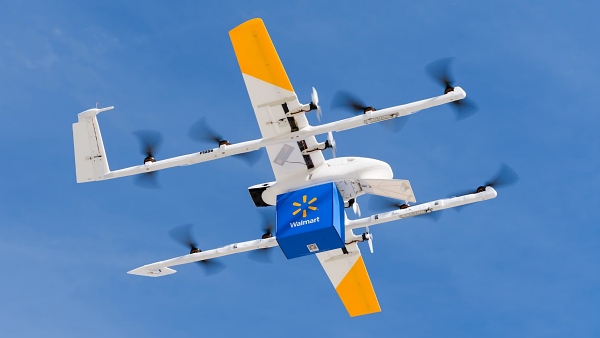
Associate Professor Luis Mejias and others said autonomous air taxis and urban delivery drones could become close to everyday life within the next 10 years. The researchers cited as an example a recent announcement in the United States that drone delivery company Wing will expand its partnership with Walmart to 7 cities. They said related services are already moving into real-world use.
The problem is that drones cannot avoid danger the way cars can by slowing down and pulling over. Current drones carry multiple backup devices, including multiple motors, distributed propulsion systems, backup flight computers and fault-tolerant software. The researchers said that even highly reliable technology still leaves the possibility of unexpected disruptions.
Urban environments in particular can combine risk factors. Minor software errors, sensor anomalies and sudden weather changes may each have limited impact, but if they occur at once they can escalate into loss of control. Complex winds around buildings, signal dropouts and multiple drones traveling through the same airspace were also cited as factors that increase the likelihood of accidents.
The researchers said autonomous drones must quickly do three things to respond to emergencies. First, they must identify nearby people, vehicles, buildings and hazards to find a place to land. Next, they must decide on the option with the lowest risk. There may be no safe landing site nearby, and if flight to the end is difficult, they should also consider a crash site that can minimise damage. Finally, they must safely guide the aircraft to that location, even in an actual failure state and in severe weather.
Associate Professor Mejias said, "These tasks cannot be handled separately," adding, "They must be linked in a single safety system that makes real-time decisions and responds." That means emergency response should not operate with detection, decision-making and guidance functions separated.
The issues are also clear on the regulatory side. Current drone regulators focus on preventing failures through strict testing and certification and backup systems. But the researchers pointed out that there is relatively little discussion of issues such as how quickly a drone can find a safe landing site after a failure, and whether safe flight is possible even when some systems are stopped.
The researchers stressed that the most resilient system is not one in which no problems occur at all, but one that can detect new problems, adapt to changing situations and reduce risk before events escalate. As a result, competition in delivery drones and air taxis is increasingly likely to shift from flight performance to autonomous response capability in abnormal situations and safety design.
 Jinju Hong
hongjj@d-today.co.kr
Jinju Hong
hongjj@d-today.co.kr